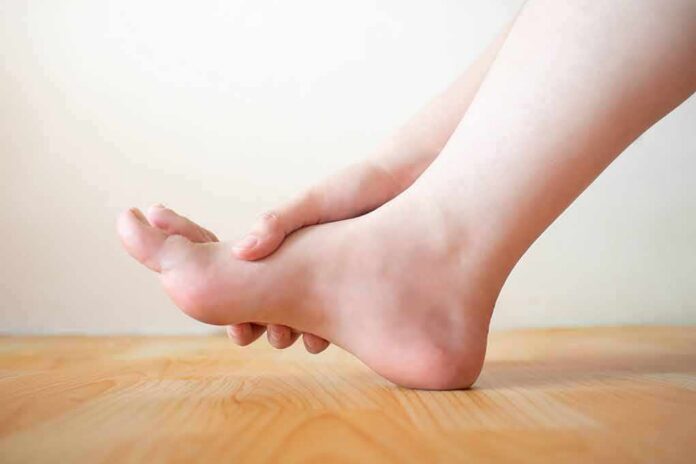
Your feet carry 100 muscles, tendons, and ligaments, and new research shows that strengthening them can improve balance and lower the risk of falls at almost any age.
Story Snapshot
- Reviews of foot-muscle training show gains in balance, strength, and reduced disability scores.
- The “short foot exercise” is the most recommended move for building foot strength.
- Eight weeks of foot training grew intrinsic muscle size by more than 20 percent in one study.
- Scientists warn the evidence is still thin, with small studies and mixed results on falls and walking.
Weak Feet Link to Poor Balance and Higher Injury Risk
A 2023 review found that intrinsic foot muscle exercises improved balance and strength while lowering self-reported disability. The same review linked the training to better sensory and motor function in the foot and ankle, key systems the body uses to stay upright and avoid falls.
Researchers say the feet act like a foundation. When the small muscles inside them grow weak, the arch can drop and the whole leg loses stability. That chain reaction is why physical therapists now build foot work into programs for athletes, older adults, and anyone recovering from ankle injuries.
The Short Foot Exercise Leads the Pack
Across multiple studies, one move keeps showing up as the top choice: the short foot exercise. It asks a person to shorten their foot by drawing the ball of the foot toward the heel without curling the toes, building strength in the arch itself.
An eight-week program of foot-focused exercises increased the size of intrinsic foot muscles by as much as 22.3 percent in one controlled trial. That kind of muscle growth in such a small body part surprised researchers, since the feet are rarely trained directly.
Minimalist Shoes and Barefoot Training Show Promise
Going without thick, cushioned shoes may help too. One study found toe-flexion strength rose by 57.4 percent after six months of daily activity in minimal footwear, suggesting everyday habits, not just gym exercises, can rebuild foot strength over time.
A broader review of barefoot and minimalist strength programs backed this up, reporting consistent improvements in foot muscle shape and function across the studies it examined. Researchers say the shift away from heavily padded shoes forces the foot’s own muscles to do more of the work.
Bigger Picture: Evidence Still Building
Not every claim holds up equally well. A 2024 meta-analysis covering 28 studies and nearly 1,400 people rated the overall evidence as low to very low quality, with inconsistent results for muscle-size changes. Foot exercises helped some measures but showed little effect on running mechanics or gait speed.
A separate review of ankle and foot exercises in older adults found real gains in ankle strength and balance, but called the evidence low-quality and noted the studies varied widely in design. Researchers agree foot training helps local strength and balance, but say larger, more consistent studies are needed before claims about fall prevention or full-body stability go further.
Sources:
menshealth.com, pubmed.ncbi.nlm.nih.gov, sciencedirect.com, dergipark.org.tr, bmcgeriatr.biomedcentral.com