Duke University engineers have built an injectable gel that helps the brain heal itself after a stroke, even when given more than a full day after the damage occurred.
Quick Take
- Duke researchers created an injectable biomaterial scaffold that helped mouse brains regrow blood vessels and nerve tissue after stroke.
- The gel worked even when injected more than 24 hours after the stroke happened, a window many current treatments miss.
- Treated mice showed better motor skills, including improved performance on a paw-placement walking test.
- The scaffold works by calling in the body’s own immune cells to help rebuild damaged tissue instead of replacing it with scar tissue.
What The Duke Team Actually Built
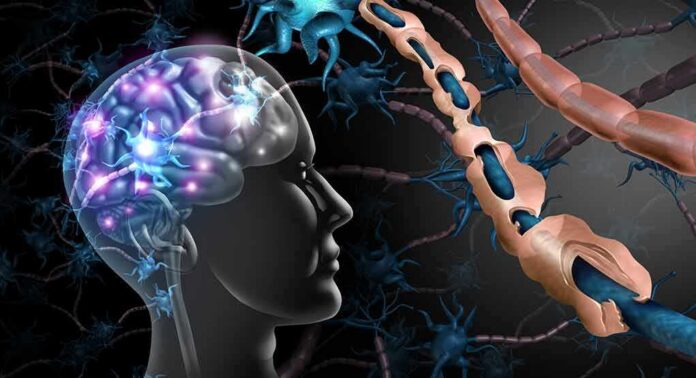
A stroke caused by a blood clot cuts off oxygen to part of the brain. That tissue dies and leaves behind an empty cavity. Normally, the brain fills that space with scar tissue that blocks repair. Duke’s biomedical engineers designed a soft, porous gel made of tiny connected particles meant to fill that cavity instead, giving the brain a scaffold to rebuild on rather than a wall to grow around.
The material is called a microporous annealed particle scaffold, built from hyaluronic acid, a substance already found in the body’s own connective tissue. Its tiny pores act like scaffolding on a construction site, giving new cells something to grip and grow along. Researchers injected it directly into the stroke cavity in mice, letting it take the shape of the empty space rather than requiring surgery to fit a solid implant.
Why The Timing Result Matters
Most stroke treatments work only in the first few hours after symptoms start. Clot-busting drugs and mechanical clot removal both depend on speed, and patients who arrive late often have far fewer options. Duke’s team injected their scaffold more than 24 hours after the stroke in mice and still saw vascular repair, neural remodeling, and improved motor performance. That extended window is the detail worth paying attention to.
The gel does not just sit inertly in the cavity. It promotes new blood vessel growth into the dead space, giving oxygen and nutrients a path back into tissue that had none. It also encourages nerve fibers to grow along those new vessels, effectively rebuilding transportation and communication lines at the same time instead of one after the other.
The Immune System Does The Heavy Lifting
Rather than delivering stem cells or drugs from outside the body, the scaffold recruits the patient’s own immune cells to do the repair work. Duke’s release describes this as harnessing the immune system, turning cells that normally clean up damage into active participants in rebuilding it. That approach avoids some of the complications tied to transplanting foreign cells into the brain.
Mice given the optimized version of the scaffold performed better on a grid-walking test, a standard measure of motor coordination after brain injury. Better footing on that test signals real functional recovery, not just tissue changes visible only under a microscope. That link between biological repair and physical movement is what separates a lab curiosity from a genuine medical prospect.
Where This Fits In A Bigger Field
This is not the first biomaterial aimed at stroke recovery. Duke’s own labs have tested related scaffolds paired with growth factors and synapse-building proteins in earlier mouse studies. UCLA researchers have separately built a similar hydrogel that regrew neurons and blood vessels in stroke-damaged mouse brains. Immune cells are increasingly viewed as central players in stroke recovery generally, not a side effect to manage.
A 2019 review of 66 published studies found biomaterials for stroke consistently produce strong results in animal models, and researchers describe immune response, blood vessel growth, and nerve repair as working together rather than as separate problems to solve one at a time. Still, no biomaterial has yet been approved for a clinical trial in stroke patients, a gap that reviewers in the field openly acknowledge. Duke’s mouse results are encouraging, and the extended treatment window is genuinely notable, but the path from an injectable gel in a mouse brain to an approved therapy for human stroke patients remains long.
Duke researchers developed an injectable scaffold that helped stroke-damaged brains grow new blood vessels, support nerve regrowth, and recover movement in mice. The treatment appears to work partly by recruiting the body’s own immune cells, including neuthttps://t.co/9Fj9AejjOD
— Michael W. Deem (@Michael_W_Deem) September 4, 2026
For the roughly 800,000 Americans who suffer a stroke each year, treatments that work outside the first few hours could change who gets a real shot at recovery. That is the promise behind this research, even as it moves through the slow, careful process science demands before reaching a hospital near you.
Sources:
sciencedaily.com, pratt.duke.edu, medibio.tiisys.com, pmc.ncbi.nlm.nih.gov, sites.duke.edu, pubmed.ncbi.nlm.nih.gov