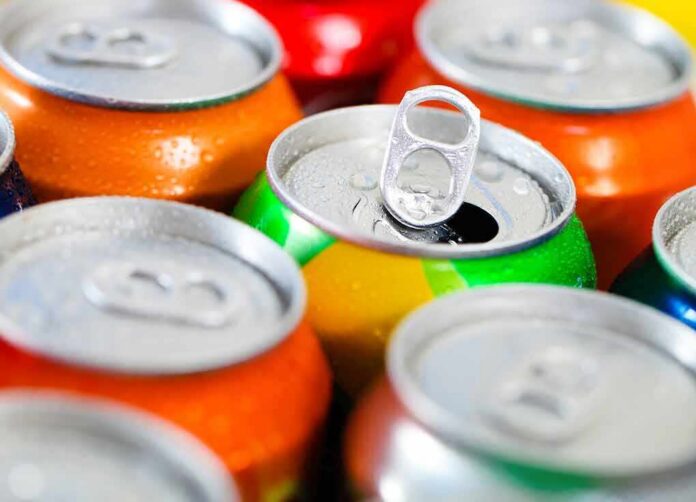
Doctors are flagging a sharp signal: reported heart emergencies show up far more often after energy drinks and stimulant products in young adults than after other products.
Story Snapshot
- Reports of cardiac arrest, heart attack, and rhythm problems are higher after energy drinks and stimulant products in FDA files.
- The signal is strongest in adults aged 18–34, not the usual heart-risk group.
- Some cases describe heart attacks and even deaths after heavy consumption in young men.
- Federal agencies warn very high caffeine can trigger dangerous heart rhythms and seizures.
The FDA reporting signal that grabbed attention
Analysts reviewed more than 28,000 Food and Drug Administration adverse-event reports from 2017 to 2025. They found energy drinks and stimulant supplements linked with much higher reporting of serious heart problems versus comparison products. Cardiac arrest appeared about 11 times more often, heart attack 4.5 times more often, abnormal rhythms four times more often, fast heart rate nearly three times more often, chest pain 2.7 times more often, and fainting twice as often. These are associations in reports, not proof of causation, but the size of the signal is hard to ignore.
The pattern stands out most in adults 18 to 34. That group rarely tops heart-risk charts. Yet here, they did. This matches what emergency doctors have seen for years: palpitations, chest pain, and collapse after heavy stimulant use. Federal agencies also warn that very high caffeine can cause rapid or erratic heartbeat and even death. That is not fringe talk. It comes straight from the Food and Drug Administration and the National Institutes of Health.
What a can really contains, and why dose matters
The Food and Drug Administration says up to 400 milligrams of caffeine per day is not generally linked to negative effects for most healthy adults. That does not mean every product, combo, or person is safe at that level. Some energy drinks pack more caffeine per ounce than coffee. Pre-workout and “fat-burner” supplements can push doses even higher, sometimes in concentrated powders that are easy to mismeasure. Pure or highly concentrated caffeine can spike heart rhythm and cause seizures at small missteps in measuring.
Labels do not always tell the whole story. Formulas vary. Some products add other stimulants such as guarana or yohimbine, or compounds like synephrine. The result can be stronger effects than caffeine alone, or different timing. That makes a simple “it is like coffee” comparison weak. People also stack products, work out hard, skip sleep, or drink alcohol. Those common add-ons can push a borderline heart into a dangerous rhythm. Personal tolerance differs, and young does not mean immune.
Real cases and what they show—and do not
A 2026 patient-level review pulled together 31 young men, average age 25.6 years, with severe events after energy-drink use. Twenty-eight met criteria for heart attack or acute coronary syndrome. Six had cardiac arrest. Two died. These are not randomized trials, and some patients had other risk factors. Case reports can overrepresent extreme outcomes. But the pattern across cases points to a real hazard window, especially with heavy or stacked use.
Short-term trials often do not show deaths or heart attacks, and industry groups cite that to argue safety. But many trials are small, short, and exclude higher-risk or real-world stacking. Reviews still note changes in heart rhythm markers like the QT interval after energy drinks. That is a red flag. It is not proof of a future cardiac arrest, but it is not nothing. Responsible adults look at early signs and adjust behavior before the ambulance arrives.
Sorting the signal from the noise: practical takeaways
Calls for caution do not mean panic. The Food and Drug Administration’s 400 milligram daily benchmark helps frame the middle. The problems cluster at the edges—big single doses, concentrated powders, multiple cans in a short time, or mixes with other stimulants or alcohol. If your chest pounds, you feel lightheaded, or your smartwatch shows a jumpy rhythm after a can, that is your early warning. Stop. Hydrate. Skip the next one. See a doctor if symptoms persist or hit hard.
Parents and coaches should set clear rules for teens and young adults. No energy drinks for kids. Avoid them before intense workouts. Do not mix with alcohol. Check medications for stimulant effects. Read labels and assume the actual caffeine may vary. Government should police dangerous concentrations and undisclosed stimulants. Adults should own their choices—and their limits.
Sources:
fda.gov, newsroom.heart.org, ods.od.nih.gov, pmc.ncbi.nlm.nih.gov