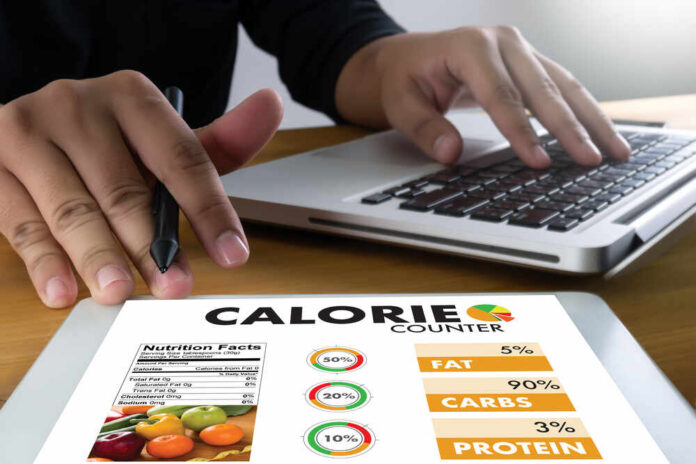
The calorie math you were promised isn’t wrong—it’s just missing the parts your body controls when you’re not looking.
Quick Take
- CICO is real physics, but “eat less, move more” fails because humans aren’t bomb calorimeters.
- Food labels and calorie-burn calculators carry big error ranges, so precision tracking can become precision fiction.
- Your brain and hormones defend your weight through metabolic adaptation, hunger signals, and energy-sparing behavior.
- Muscle loss during dieting quietly lowers resting burn, making regain more likely within months.
- Food quality and training style change where calories go—toward muscle or fat—beyond simple arithmetic.
The CICO Myth That Won’t Die: The Spreadsheet That Ignores Biology
CICO survives because it sounds like common sense: spend more than you earn and the account drops. As a principle of energy balance, it holds up. The problem starts when diet culture sells it as a household rule, as if the body obediently subtracts 500 calories a day and hands you a predictable result. Your body renegotiates the deal through appetite, fatigue, and efficiency—often fast enough to make early “success” a trap.
The real-world results expose the gap between theory and practice. Meaningful long-term weight loss proves uncommon, and regain often arrives within 6–12 months. That pattern doesn’t mean people are lazy or dishonest. It means the simplified version of CICO teaches adults to fight physiology with willpower alone.
Calories In Isn’t a Number—It’s an Estimate With Moving Parts
Start with the part everyone thinks they can control: intake. Nutrition labels can legally miss the mark by a meaningful margin, and restaurant numbers can drift by hundreds of calories on a single item. Even if the label were perfect, digestion isn’t. Cooking and processing can make more energy available than the database assumes. Gut bacteria differ between people, changing how much energy gets extracted. Tracking apps can’t capture “just a bite,” and diets collapse on those invisible margins.
Now look at the “out” side of the equation. Calorie-burn calculators regularly miss by wide percentages even in healthy people, and the miss grows in older or heavier populations—the very readers most likely to care about sustainable weight loss. The uncomfortable punchline: a person can track flawlessly and still be wrong. That doesn’t make tracking useless; it makes it a blunt instrument. Using it as a court verdict—“the math says I must be cheating”—creates unnecessary self-blame.
Metabolic Adaptation: Your Body Balances the Books After You Cut Spending
Reduce intake and the body doesn’t sit still. Energy expenditure often falls as body mass decreases, but adaptation goes beyond that. Hormones that regulate hunger and fullness shift in directions that make eating more appealing and restraint more exhausting. The brain acts like mission control, integrating signals from the gut, fat cells, and organs. People experience this as “my metabolism broke,” but a more accurate framing is “my system adjusted to the new budget.”
That adjustment shows up in ordinary life, not just lab measurements. You move less without noticing. You fidget less. Workouts feel heavier. Sleep can get choppy, and stress rises, pushing cravings toward high-reward foods. The deficit that looked clean on paper gets quietly erased by a body designed to protect you from famine.
The Muscle Trap: Lose Weight Fast, Then Pay Interest for Years
Calorie restriction can strip muscle along with fat, especially when protein, resistance training, and recovery aren’t treated as non-negotiables. Losing lean mass matters because resting energy expenditure—the “keep the lights on” burn—depends heavily on fat-free mass. Drop that engine size and the same lifestyle now maintains a higher body-fat percentage at a lower calorie intake. Many people interpret regain as moral failure. A more grounded interpretation: they rebuilt fat faster than they rebuilt the machinery that burns fuel.
This is where “eat less, move more” becomes politically and practically irritating: it blames the individual while ignoring the system’s predictable response. Personal responsibility matters, but honest coaching respects reality. If a plan predictably causes ravenous hunger, fatigue, and muscle loss, it’s not “tough love,” it’s a bad plan. Adults don’t need pep talks; they need strategies that preserve strength, stabilize appetite, and avoid turning weight loss into a cycle of shrinking and rebounding.
Food Quality and Training Change the Destination of Calories
CICO messaging often claims food type doesn’t matter if calories match. That claim collapses under real physiology. Different diets can produce different short-term scale changes, sometimes driven by water shifts rather than fat loss. More importantly, exercise and diet quality influence nutrient partitioning—whether incoming energy supports muscle or gets stored as fat. Strength training, conditioning, and recovery aren’t just “extra credit”; they help keep more lean mass while dieting, which protects long-term maintenance.
One of the most useful ways to think about this is the difference between low-intake/low-expenditure and high-intake/high-expenditure lifestyles that create the same deficit. A person who eats a bit more while moving and training more can sometimes sustain the plan better, preserve muscle better, and feel less miserable—without violating energy balance. That isn’t a permission slip to binge; it’s a reminder that the body tolerates a deficit better when it’s not paired with metabolic slowdown and constant deprivation.
Sources:
https://culinahealth.com/the-truth-about-calories-in-calories-out/
https://www.veri.co/learn/metabolic-myth-buster-2-calories-in-calories-out
https://www.precisionnutrition.com/calories-in-calories-out
https://pmc.ncbi.nlm.nih.gov/articles/PMC506782/