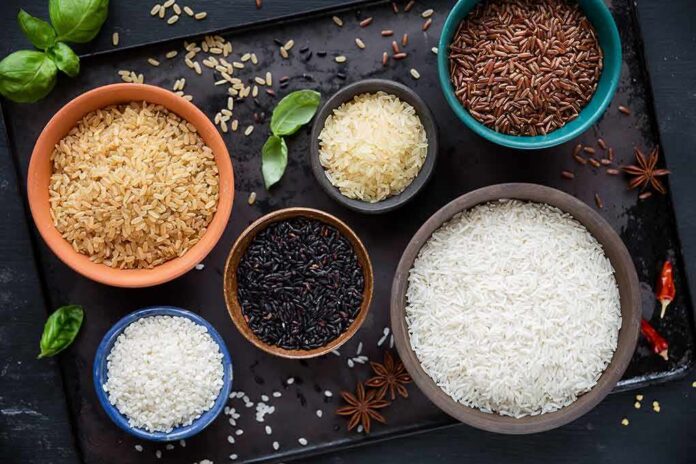
A grain of rice just got a lot more interesting, and it turns out color might matter more than anyone thought.
Quick Take
- Researchers at Hokkaido University studied 56 types of Japanese rice and found black and green varieties carry fat compounds never before seen in rice.
- These pigmented rices may break down starch slower than white rice, which could mean steadier blood sugar after meals.
- The newly found fats belong to a class called FAHMFAs, short for fatty acid esters of hydroxy medium-chain fatty acids, tied to other health perks in past studies.
- Decades of research on colored rice show real promise for heart and metabolic health, but results differ widely by variety.
A Surprise Hiding Inside Colored Rice Grains
Scientists set out to map the fat content of 56 different japonica rice cultivars grown in Japan. What they found surprised even the research team. Black and green rice varieties held a group of fat compounds never documented in rice before, known as FAHMFAs. These aren’t just leftover plant chemicals. Early science on this same fat family links it to better insulin response in other foods.
The study also flagged a second compound group called LNAPEs, found mostly in black rice. Together, these two lipid families give black and green rice a fat profile that looks nothing like ordinary white rice. White rice, by contrast, has had most of its bran and germ stripped away during milling, taking much of this chemistry with it. That processing step is exactly why plain white rice lacks the compounds researchers are now excited about.
Slower Digestion Could Mean Steadier Blood Sugar
Beyond the newly found fats, the study tested how fast each rice type’s starch breaks down under lab conditions mimicking human digestion. Black and green rice digested more slowly than white rice. Slower starch breakdown generally means glucose enters the bloodstream at a gentler pace instead of causing a sharp spike. That pattern matters for anyone watching blood sugar, including people managing prediabetes or type 2 diabetes risk.
Reporting on the findings noted the combination of unusual fats and slow-digesting starch could make black and green rice worth a closer look for heart health and blood sugar control. Nothing here proves colored rice fixes disease. But when a food shows two separate biological signals pointing the same direction, that’s the kind of finding that earns follow-up study, not a shrug.
Why Rice Color Alone Isn’t the Whole Story
This isn’t the first time colored rice has drawn scientific attention. A systematic review covering 69 studies published between 2019 and 2024 found pigmented rice varieties carry real nutritional value tied to antioxidant and metabolic benefits. Anthocyanins, the pigments giving black and purple rice their deep color, have shown anti-inflammatory and blood-sugar-friendly effects in lab and animal studies across years of published work.
Yet color is not a guarantee. One review of rice varieties found that grain color, whether brown, red, purple, or white, does not reliably predict how a rice will affect blood sugar in the body. Some pigmented rices perform beautifully in tests. Others don’t. The new Hokkaido findings add a specific, testable reason why black and green rice in particular may stand apart from the pack.
What This Means for the Table
None of this makes white rice dangerous or colored rice a miracle cure. Rice remains a staple food eaten safely by billions of people daily. What changes is the picture scientists have of what’s actually inside these grains. Compounds once invisible to researchers are now on the map, and that opens the door to real questions about diet and long-term health that didn’t exist a year ago.
For everyday shoppers, the practical takeaway is simple. Black and green rice, often sold as specialty or heritage grains, may offer more than just a different look on the plate. Whether that translates into measurable health gains for real people eating real meals is the next chapter researchers still need to write. For now, the science gives colored rice a legitimate reason to earn a spot in the pantry.
A bowl of black rice won’t undo a bad diet, and no single food replaces exercise or moderation. But when solid lab research turns up genuine, previously unknown nutrients in a food eaten daily by half the planet, that’s worth paying attention to, not dismissing as just another health fad.
Sources:
sciencedaily.com, eprints.lib.hokudai.ac.jp