A single injection that rewrites your DNA and permanently silences the gene responsible for dangerous cholesterol levels is no longer science fiction — it is already inside human bodies, and the early numbers are stunning.
Story Snapshot
- Gene-editing therapies targeting the PCSK9 gene can silence cholesterol production at the source with one infusion, potentially for life.
- In monkeys, a single infusion cut PCSK9 levels by 89% and dropped LDL cholesterol by 61% — durably.
- First-in-human trials have already exceeded expectations, with one therapy reducing LDL by more than 60% in early participants.
- The irreversible nature of the edit is both the therapy’s greatest strength and its most serious unanswered question.
The Gene That Controls Your Cholesterol — And What Happens When You Turn It Off
Your liver produces a protein called PCSK9 that destroys receptors responsible for pulling LDL cholesterol out of your bloodstream. More PCSK9 means fewer receptors, which means more LDL circulating and accumulating in your arteries. Statins work by suppressing cholesterol synthesis upstream. PCSK9 inhibitor drugs block the protein after it is made. Gene editing does something far more radical — it goes into the liver cells and rewrites the DNA instruction that makes PCSK9 in the first place. [1]
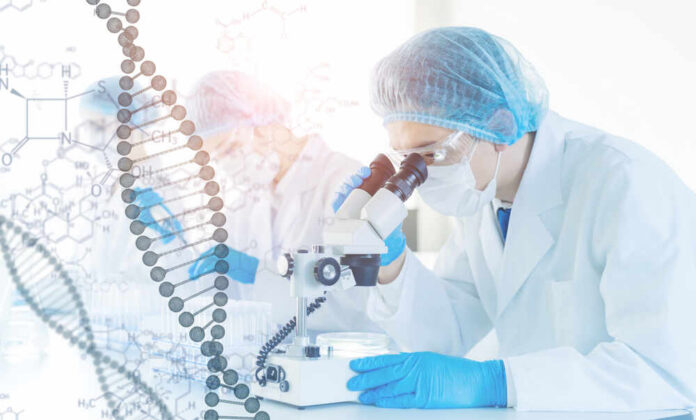
The technology uses a technique called base editing, delivered via lipid nanoparticles — essentially fat bubbles that carry the editing machinery directly into liver cells. Once inside, the editor changes a single letter in the DNA code, disabling the PCSK9 gene permanently. No virus. No ongoing medication. No refills. The liver simply stops producing the protein that was sabotaging your cholesterol levels. [1]
What the Animal and Human Data Actually Show
The preclinical results are the kind of numbers that make cardiologists sit up straight. A single intravenous infusion in non-human primates produced an 89% reduction in circulating PCSK9 and a 61% drop in LDL cholesterol — and those reductions held stable over time. [2] When researchers moved into human trials, expectations were deliberately conservative. A 30 to 40 percent LDL reduction would have been declared a success. The first-in-human results from a therapy called CTX310 blew past that threshold, reducing LDL by more than 60 percent in early participants. [3]
Verve Therapeutics is running a parallel program called VERVE-102, designed as a single-course medicine that permanently inactivates the PCSK9 gene with the stated goal of lowering LDL throughout the patient’s life. Phase I data from the Heart-2 trial showed a 62% reduction in LDL cholesterol, an absolute drop of 78 milligrams per deciliter, and the therapy was generally well tolerated across participants. [5] These are biomarker results, not mortality data, but in cardiovascular medicine, sustained LDL reduction at that magnitude has historically translated into meaningful reductions in heart attacks and strokes over time.
The Part That Should Make You Think Twice Before Getting Too Excited
Here is where intellectual honesty matters. The CTX310 trial involved 15 participants with a minimum follow-up of 60 days. [3] Sixty days. The American Heart Association itself stated that larger and longer-term studies are needed before drawing firm conclusions. No one in the published human record has yet demonstrated that this edit holds for five years, ten years, or a lifetime. The most mature durability evidence still comes from animals, not people. That gap between animal data and human outcomes is where promising therapies have collapsed before, repeatedly, across the history of medicine.
Scientific breakthrough: VERVE-102, one-time gene editing for high cholesterol
A single IV infusion uses adenine base editing to permanently inactivate the PCSK9 gene in the liver, boosting LDL receptors and slashing "bad" LDL-C.
Current stage: Ongoing Phase 1b Heart-2 trial…
— Pankaj Kharode (@pankajkharode) June 7, 2026
The irreversibility deserves serious weight. Verve describes VERVE-102 as a therapy that permanently turns off a gene. [4] If an off-target edit causes liver damage, triggers an immune cascade, or produces an effect no one anticipated five years from now, there is no antidote and no off switch. That is not a reason to abandon the research — it is a reason to demand rigorous long-term follow-up, transparent adverse-event reporting, and independent auditing of trial data before this technology reaches broad clinical use. Company-sponsored framing that uses lifetime language before independent confirmation exists should be read with appropriate skepticism, regardless of how promising the early numbers look.
Why This Still Represents a Genuine Turning Point in Cardiovascular Medicine
Set aside the hype and the caution simultaneously, and what remains is legitimately remarkable. Cardiovascular disease kills more Americans than any other condition. Medication adherence is a chronic failure point — patients stop taking statins, skip injections, and drift back toward dangerous LDL levels. A one-time intervention that permanently addresses the underlying biological mechanism removes that failure point entirely. For patients with familial hypercholesterolemia, a genetic condition that causes catastrophically high LDL from birth and resists conventional treatment, a permanent gene-level fix is not a convenience — it could be the difference between a normal lifespan and a fatal heart attack at 40. [1] The science is real, the early results are genuinely encouraging, and the questions that remain are the right ones to be asking — not reasons to dismiss what is already working.
Sources:
[1] Web – Scientists are Inventing a One-Time Drug to Permanently Fix High …
[2] Web – Gene Editing for the Treatment of Hypercholesterolemia – PMC
[3] Web – Gene editing: A one-time fix for dangerously high cholesterol?
[4] Web – First-in-human trial of CRISPR gene-editing therapy safely lowered …
[5] Web – Verve 102 – Verve Therapeutics