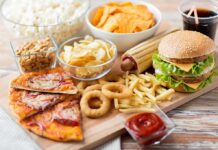
Twenty people with depression cut ultra-processed food from their diets by more than 85 percent, and their mood scores improved more than researchers expected from a short pilot study.
Quick Take
- A University of California, San Francisco pilot study found participants saw moderate to large drops in depression scores after slashing ultra-processed food intake.
- Researchers recruited 20 adults already diagnosed with depression, and 14 of them also had anxiety.
- The study ran in JAMA Psychiatry and was funded by the National Institutes of Health.
- Scientists still debate whether “ultra-processed” is a precise enough category to blame for the effect.
What The Researchers Actually Found
Researchers at the University of California, San Francisco published their findings September 23 in JAMA Psychiatry. Participants reduced their ultra-processed food intake by more than 85 percent during the trial. That shift lined up with moderate to large improvements across three separate depression measures, a result the research team called striking for such a short intervention.
The study pulled many of its 20 participants from a waiting list at the university’s own depression clinic, giving researchers a group already struggling with the condition rather than a general population sample. Fourteen of the 20 also had diagnosed anxiety, meaning the diet change applied to people carrying overlapping mental health burdens, not just mild mood dips.
Why This Small Study Carries Real Weight
Size matters here, and 20 people is tiny by clinical trial standards. But the research team believes this is among the first efforts to show that cutting these foods produces a measurable drop in depression symptoms, rather than just an association found in survey data. That distinction between correlation and cause is the whole ballgame in nutrition science, and it is why this pilot drew national attention despite its small size.
Outlets from coast to coast picked up the story within days, and for good reason. Doctors have spent years linking heavy consumption of packaged, chemically altered foods to worse mental health outcomes, but proving that removing those foods actually helps people feel better is a much higher bar to clear. This pilot claims to clear it, even if only in a small, carefully recruited group.
The Bigger Scientific Debate Over Processed Food Labels
Separate from this pilot, a larger scientific fight continues over how food gets labeled “ultra-processed” in the first place. The NOVA classification system, which created the category, groups foods by how heavily manufactured they are rather than by their actual nutrition content. Critics argue this approach can lump a fortified whole-grain bread in with a candy bar, simply because both go through industrial processing steps.
Other researchers push back hard on this criticism, insisting the terms “processing” and “ultra-processing” lack clear, measurable definitions that regulators or scientists can apply consistently across different food products. Food industry groups have published their own critiques, arguing that processing level alone does not determine whether a food is good or bad for the body. That argument matters because it shapes how seriously the public should treat headlines built around the NOVA category.
Despite those definitional fights, a 2022 systematic review found a consistent link between higher ultra-processed food intake and increased rates of depression across multiple studies. A broader 2026 analysis reached a similar conclusion, noting that observational data keeps pointing the same direction even as scientists argue over mechanisms and definitions. The pattern holds up across populations, even if the “why” remains contested.
What Comes Next For This Line Of Research
Expert reviewers have noted that most evidence linking processed food to mental health comes from observational studies, while actual randomized trials testing dietary change have been short and small, often involving just 9 to 20 people. This UC San Francisco pilot fits that exact pattern, which means it adds a useful data point without settling the larger question once and for all.
We often ask people with depression how they’re feeling but we never ask how they’re eating.
People in the animal based community understand this and now there’s a study that supports what many of us have long known:
The less ultra processed food you eat, the happier you are… pic.twitter.com/HnYUbUL5s1
— Cary Kelly (@CaryKelly11) October 26, 2026
A separate randomized pilot trial testing minimally processed diets against depressive symptoms in 31 adults is already underway, suggesting researchers are racing to build on these early signals with larger, more rigorous studies. For readers watching their own plates, the practical takeaway stays simple: eating real food instead of industrial substitutes keeps showing up as good advice, no matter how the scientific definitions eventually shake out.
Sources:
mindbodygreen.com, ucsf.edu, sfchronicle.com, usnews.com, ground.news, pubmed.ncbi.nlm.nih.gov, cambridge.org, sciencemediacentre.org, fooddrinkeurope.eu