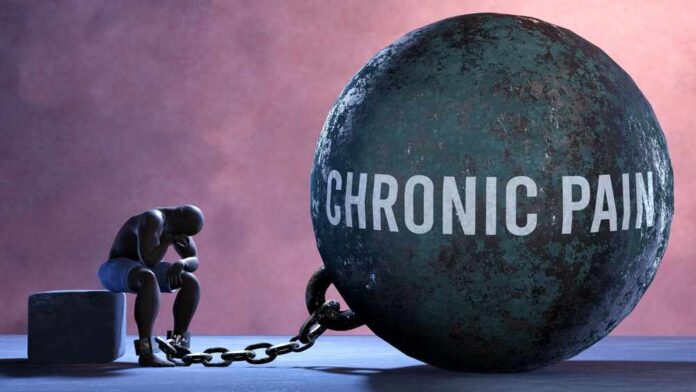
Fear does not just make pain worse; it quietly trains your brain to avoid the very challenges that would unlock your potential.
Story Snapshot
- Fear-avoidance turns short-term pain into long-term disability for many people.
- The same “avoid and protect” mindset shows up in athletes, workers, and performers.
- Clinical experts see strong evidence in pain and injury contexts, weaker evidence in general “excellence.”
- Dr. Gio Valiante pushes this idea into performance psychology, but the data has gaps.
How fear-avoidance turns short-term pain into long-term disability
The fear-avoidance model began as a way to explain why some people stay stuck in pain long after the body should have healed. Researchers found that the key problem was not the tissue damage itself, but how the person thought about and reacted to pain. When pain is seen as a serious threat, people become afraid of movement and of making things worse. That fear leads them to stop normal activity and withdraw from work, exercise, and daily tasks.
This withdrawal starts a vicious cycle. Less movement weakens muscles, stiffens joints, and lowers fitness. Life shrinks. Pain feels stronger because the body is deconditioned and the person is watching every sensation. Studies on back pain and other musculoskeletal problems show that high fear-avoidance beliefs predict greater disability over time, often more than the actual medical findings do. People who catastrophize pain and avoid activity are more likely to slide from an acute episode into chronic pain and long-term disability.
Why alarm in the mind matters more than the sensation in the body
Pain researchers describe a key “tipping point” where the sense of alarm, not the raw signal from nerves, drives the decision to stop. When a person interprets pain as dangerous, they become hypervigilant. They watch every movement and every twinge. They seek safety by cutting back on activity and by guarding their body. That mental alarm flips them from the healthy path, where they keep moving and recover, to the unhealthy path of fear, avoidance, and disability. The same pain level can lead to either outcome depending on mindset.
This mental alarm also interacts with stress. Fear-avoidance behavior raises stress hormones and changes how the central nervous system processes pain. Over time, the nervous system becomes more sensitive, meaning smaller signals feel more intense. Clinical articles describe this as a self-feeding loop: fear drives avoidance, avoidance drives weakness and stress, and those changes drive more pain. The original model is simple, but decades of work still support this core story in chronic pain patients.
From clinic to playing field: fear-avoidance in athletes
Sports medicine researchers asked a natural next question: if fear of pain keeps injured workers off the job, does it also keep injured athletes off the field? They built athlete-specific tools, such as the Athlete Fear Avoidance Questionnaire, to measure how much an athlete fears pain and re-injury when thinking about returning to play. These studies found that higher athlete fear-avoidance scores are linked to longer times before returning to competition.
One study showed that athlete fear-avoidance, combined with how well the athlete functioned right after injury, explained about a third of the difference in how long it took athletes to get back to playing. Another found that fear-avoidance was the single most important factor tied to lower physical function during recovery, even more than some other psychological variables. In plain terms, athletes who feared pain and re-injury more were slower, stiffer, and less able to perform, even when their injuries were similar.
Where performance psychology pushes the model further
This is the territory where Dr. Gio Valiante works. He coaches golfers and other performers on the mental side of excellence. His themes around fear, anxiety, and flow fit the idea that a mind obsessed with avoiding pain or failure will struggle to reach peak performance. Performance psychology more broadly has long noted that fear of failure can lead to avoidance of challenge, less effort, and self-sabotage in school, business, and entrepreneurship.
Sources:
fs.blog, iasp-pain.org, physio-pedia.com, pubmed.ncbi.nlm.nih.gov, instituteforchronicpain.org, cbphysicaltherapy.com, greaterpittsburghphysicaltherapy.com, slappinglass.com, youtube.com, fearlessgolf.com, dovepress.com, academia.edu, pmc.ncbi.nlm.nih.gov, spectrum.library.concordia.ca, sciencedirect.com