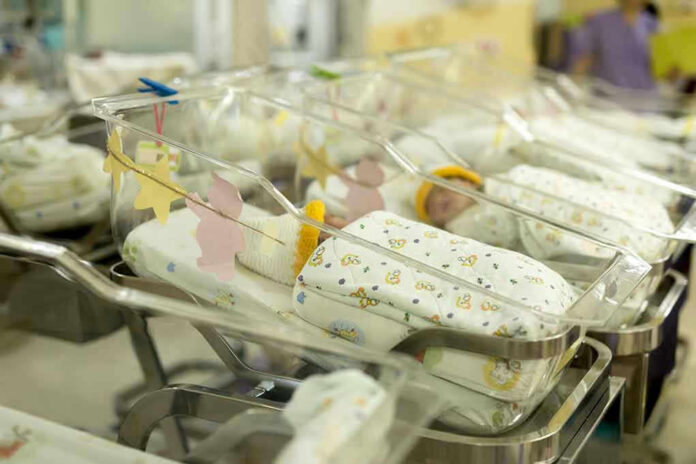
Dozens of babies ended up hospitalized with a rare, paralyzing illness after eating a popular organic baby formula, and parents want to know why it took so long for anyone to say so.
Story Snapshot
- ByHeart recalled all its Whole Nutrition Infant Formula nationwide after a multistate infant botulism outbreak.
- Federal health officials say the outbreak grew to 48 infants sick across 17 states, with illness onsets dating back to December 2023.
- ByHeart found Clostridium botulinum in some finished-product samples but says it still has not pinned down the root cause.
- The Food and Drug Administration (FDA) says this is the first documented U.S. botulism outbreak ever tied to infant formula.
A Recall That Kept Growing As Cases Piled Up
ByHeart first pulled two lots of formula on November 8, 2025. Three days later, the company expanded the recall to every batch it had ever made. The Food and Drug Administration and the Centers for Disease Control and Prevention (CDC) said epidemiological and lab evidence pointed straight at ByHeart Whole Nutrition Infant Formula as the outbreak’s source. By mid-December, health officials counted 23 hospitalized infants across 13 states. That number kept climbing.
By the time federal investigators closed the books, the outbreak had reached 48 infants in 17 states, with the earliest known case stretching back to December 2023, long before anyone raised a public alarm. That timeline matters. It means sick babies may have gone unrecognized for nearly two years while the product stayed on store shelves, which is exactly the kind of gap parents are furious about now.
What ByHeart Found, And What It Still Won’t Say
ByHeart has not hidden from the science. The company said it tested 36 samples of its finished product and found Clostridium botulinum in six of them. That is a real, documented contamination finding, not a rumor. But ByHeart has also repeatedly said it does not yet know how the bacteria got into its formula, and it has pushed back on claims that testing from an already-opened can proves anything about causation.
Regulators disagree with that framing. The FDA said its own epidemiological, laboratory, and traceback work showed that consuming ByHeart formula caused the outbreak, and it labeled the product adulterated under federal law. The agency also warned that a negative test does not clear a product, because Clostridium botulinum is notoriously hard to detect in powdered formula. That distinction, hard to detect versus not present, is central to why families feel like they are getting partial answers instead of full ones.
A Possible Clue In Powdered Whole Milk
Months into the investigation, health officials floated a specific lead: powdered whole milk used in ByHeart’s recipe. STAT News reported that federal investigators pointed to that ingredient as a possible contamination source, and ByHeart responded that the finding brought the company closer to identifying the root cause. It is a real narrowing of the search, but it is not a finished conclusion. Nobody has yet named exactly where in the supply chain the bacteria entered.
Why Parents Aren’t Satisfied With “Safe” Assurances
Some officials have described infant formula broadly as safe even as this specific outbreak unfolded, a message parents say clashes with what happened to their children. ByHeart itself acknowledged it could not rule out that contamination reached every lot it has ever produced, not just the recalled ones. That is a striking admission from the manufacturer, and it is the kind of statement that should keep any parent’s guard up regardless of which brand sits in their pantry.
The Accountability Questions Still On The Table
The FDA later moved to strengthen how recalls get communicated, an acknowledgment that the system did not work fast enough the first time. Retailers including Target and Kroger received federal warning letters accusing them of continuing to sell recalled formula after the alert went out. A second outbreak tied to a different brand, Nara Organics, followed within months, which the FDA says makes this a supply-chain pattern worth industry-wide scrutiny. Families are right to keep pushing until regulators name a specific, provable cause rather than settling for “we’re still investigating.”
FDA says infant formula 'safe.' Parents whose babies got botulism want answers https://t.co/OsZ19uG1iR
— VE Davis (@ve_davis86139) September 15, 2026
Common sense says a two-year gap between the first sick infant and a nationwide recall deserves a real explanation, not just a corporate statement about ongoing testing. Parents trusted a label that promised clean, simple nutrition for their newborns. They deserve a finished investigation, not an open-ended one.
Sources:
youtube.com, fda.gov, cen.acs.org, byheart.com