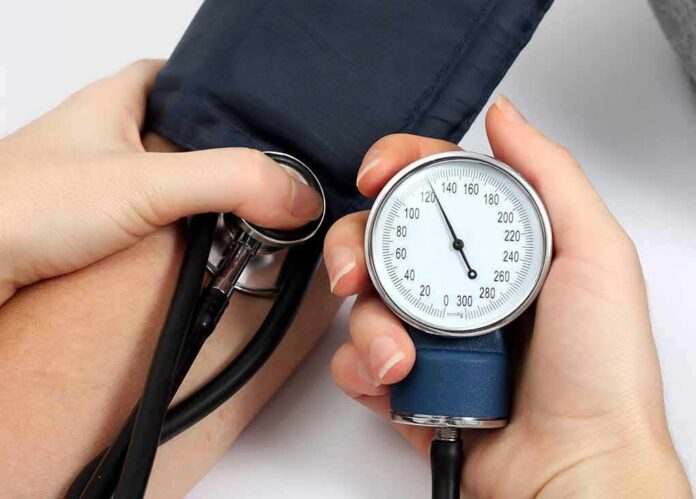
A single blood pressure cuff reading taken right after a workout can look like a medical red flag when it is actually proof the workout is doing its job.
Quick Take
- Exercise changes blood pressure, cholesterol, triglycerides, and insulin markers in measurable, well-documented ways.
- Different workouts move the needle differently, with isometric holds showing the biggest average blood pressure drops in one large analysis.
- A single odd reading after training does not mean illness, but it also does not excuse ignoring a pattern of abnormal numbers.
- Timing, hydration, and stress all shape a reading, so knowing when and how to check matters as much as the number itself.
The Five Numbers Active Adults Actually Need To Track
Five markers tell most of the story for adults over 40 who train regularly: systolic blood pressure, diastolic blood pressure, total cholesterol, triglycerides, and a marker called HOMA-IR, which estimates insulin resistance. Each one responds to exercise, but not identically, and not on the same timeline. Treating any single reading as a verdict ignores how training actually works on the body over weeks and months.
Research backs this up clearly. A large pairwise and network meta-analysis of randomized trials found aerobic training lowered resting blood pressure by about 4.5 over 2.5 points, dynamic resistance training by a similar amount, and isometric exercise, think wall sits and planks, by roughly 8 over 4 points, nearly double the others.
Why Isometric Training Keeps Surprising Researchers
A 2023 review of 270 randomized trials covering almost 16,000 participants ranked isometric exercise as the single most effective category for lowering resting blood pressure, ahead of aerobic work, weightlifting, and combined routines. That is a striking result for a style of training many gyms barely mention. It does not replace cardio or strength work. It does suggest that brief, intense muscle-holding exercises deserve a regular spot in an active adult’s weekly routine.
The effect size matters because it rivals what some blood pressure medications achieve. That does not mean a wall sit replaces a prescription. It means doctors now have solid data showing lifestyle tools can meaningfully shift a number that drives heart attack and stroke risk, especially when combined with other habits like sleep and diet.
Cholesterol, Triglycerides, And Insulin Resistance Respond Too
Blood pressure gets the headlines, but training changes other markers just as directly. One comparative study found low-volume high-intensity interval training produced the biggest drops in total cholesterol, triglycerides, and diastolic blood pressure, while traditional endurance-style exercise worked better for other outcomes. Combining moderate cardio with resistance training ranked highest for improving HOMA-IR, the insulin resistance score tied closely to future diabetes risk.
These five markers do not move in isolation. A person who starts lifting weights and walking daily will likely see blood pressure drop first, cholesterol and triglycerides shift over following weeks, and insulin sensitivity improve as consistency builds. Expecting instant across-the-board change sets people up to quit too early, right before the real payoff arrives.
What A Single Odd Reading Actually Means
Blood pressure spikes temporarily during and right after intense effort, a normal physiological response, not disease. The American Heart Association recommends avoiding caffeine, smoking, and exercise for 30 minutes before checking blood pressure at home, because all three skew the number upward. A gym-goer who checks immediately post-workout is measuring effort, not health status, and should not panic over a temporarily elevated figure.
Context still matters. One high reading taken under bad conditions is noise. A pattern of consistently high numbers across many mornings, taken correctly, at rest, is signal worth discussing with a doctor. Active adults serious about these five markers should track trends over weeks, not individual data points, and always pair a concerning number with a conversation with their physician rather than a Google search.
The Practical Bottom Line For Active Adults Over 40
The conservative, common-sense reading of this research is simple. Exercise is not a vague wellness suggestion; it is a measurable, repeatedly proven tool for improving five specific numbers that predict heart attacks, strokes, and diabetes. Isometric holds, resistance training, and interval cardio each pull different levers. Combining them, measuring correctly, and tracking trends over time beats reacting to any single scary number on a home monitor.
🏃♂️ What’s the best exercise for metabolic syndrome?
The answer may be more complicated than you think!
A new systematic review and network meta-analysis in iScience compared 10 exercise approaches across 53 studies involving 2,948 participants.
🔹 Aerobic + strength training:… pic.twitter.com/fOeiIOq5U8
— Chayakrit Krittanawong, MD, FACC, FAHA, FSCAI (@KrittanawongMD) October 8, 2026
None of this replaces a doctor’s judgment, and people on blood pressure or cholesterol medication should never adjust treatment based on workout data alone. But for the millions of active adults quietly worried about one odd reading after a hard training session, the research offers real reassurance, and a clear roadmap for which workouts move which numbers.
Sources:
pubmed.ncbi.nlm.nih.gov, jamanetwork.com, pmc.ncbi.nlm.nih.gov