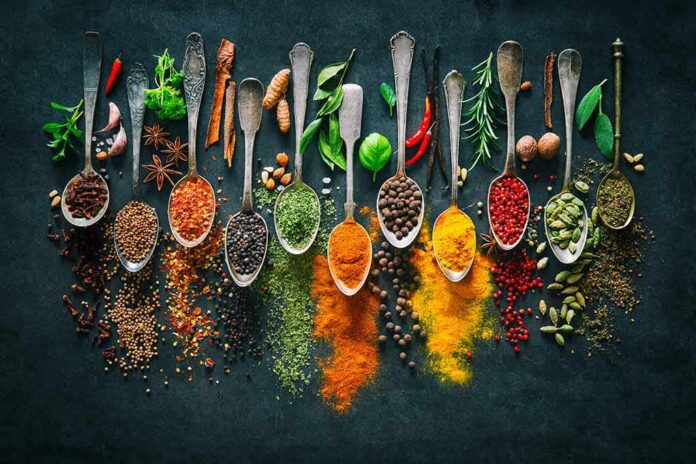
Mix chili peppers with mint or eucalyptus and a lab test found the anti-inflammatory punch jumped several hundred times higher than either spice alone.
Quick Take
- A peer-reviewed study in the journal Nutrients found that combining capsaicin with menthol or 1,8-cineole boosted anti-inflammatory activity several hundredfold over either compound alone.
- Researchers tested the combo on immune cells exposed to a bacterial inflammatory trigger, not on humans eating actual meals.
- Capsaicin comes from chili peppers, menthol from mint, and 1,8-cineole from eucalyptus, tying the lab finding to familiar kitchen ingredients.
- No human trial has yet confirmed the effect works the same way when people actually eat these spices together.
What The Study Actually Found
Scientists led by Gen-ichiro Arimura tested immune cells called RAW264.7 macrophages, exposing them to a bacterial compound that triggers inflammation. They then treated the cells with capsaicin, menthol, 1,8-cineole, and beta-eudesmol, both alone and in pairs. The combination of capsaicin with menthol or cineole suppressed inflammation several hundred times more than any single compound managed on its own.
That number sounds almost too big to believe, and some coverage trimmed it down to smaller figures like 100-fold or roughly 700 times, depending on which measurement or outlet reported it. The study itself, published in Nutrients, used the phrase “several hundred-fold” to describe the jump when researchers paired capsaicin with either of the two cooling compounds.
Why Two Spices Might Beat One
The explanation involves two separate pathways working at once. Menthol and cineole act on TRP channels, tiny gates on cell surfaces that control calcium flow and inflammatory signaling. Capsaicin appears to calm inflammation through a different route entirely, one that does not rely on those same channels.
When both pathways fire together, the cells apparently shut down inflammatory signals far more effectively than either pathway working solo. This is not a wild guess. It is a documented lab result tested directly in cells engineered to mimic an infection response, giving researchers a controlled way to measure the difference instead of just guessing from dietary patterns.
Where The Claim Needs A Reality Check
Here is the catch that matters most for anyone eyeing their spice rack tonight. This experiment happened in a petri dish, not a stomach. RAW264.7 cells do not digest food, absorb nutrients through intestines, or distribute compounds through blood and tissue the way a human body does. A dramatic effect in a cell culture dish does not automatically mean eating chili and mint together will deliver the same several-hundredfold boost inside your own body.
The study also used purified, isolated versions of these compounds at measured doses. A bowl of spicy chili with fresh mint garnish is not the same as a lab-controlled concentration of capsaicin and menthol applied directly to immune cells. Nobody has yet measured whether a normal serving of either food gets anywhere close to the doses tested in this research.
Where The Science Still Has To Go
No human trial has tested whether eating these spice combinations lowers measurable inflammation markers like C-reactive protein or interleukin-6 in real patients. Nutrition research generally moves in stages, from cell studies to animal models to human trials, before dietary guidance changes. This study represents an early mechanistic step, not a finished clinical conclusion, and no major health authority has issued guidance based on it.
That gap is exactly where good science needs to go next. Researchers could run a trial comparing people who eat standardized doses of chili and mint against those who do not, then track actual inflammation blood markers over weeks. Until that happens, the fair reading is that this is a promising cellular discovery worth watching, not a proven home remedy.
What This Means For Your Spice Rack
None of this means reaching for chili and mint is pointless. Both have long histories in traditional cooking and reasonable safety profiles when used in normal food amounts. The lab finding gives scientists a real mechanistic reason to study whether pairing warming and cooling compounds amplifies health benefits, which is more than idle speculation. It simply is not yet proof that your dinner plate is delivering a several-hundredfold anti-inflammatory effect.
Common sense says enjoy the combination if you like the flavor, season food in ways that suit your taste, and watch for future research that moves this finding from cell cultures into real human results. Science works slowly and carefully for good reason, and that caution protects people from chasing headlines instead of solid evidence.
Sources:
mindbodygreen.com, medicalxpress.com, synapse.patsnap.com, yahoo.com