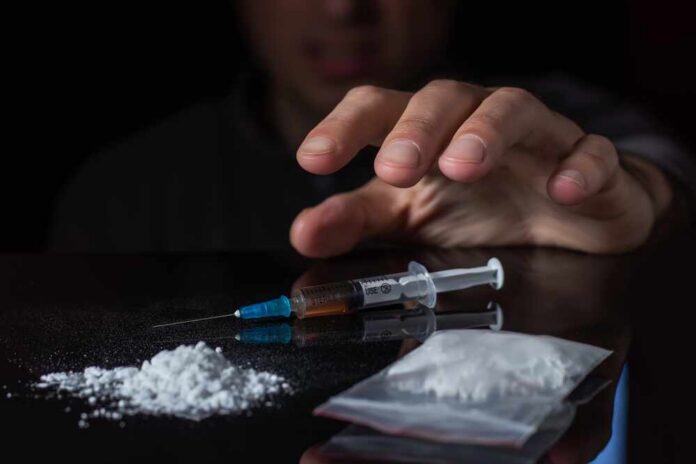
The same drug that drives people toward HIV may also be pushed by HIV itself, creating a vicious loop our public-health playbook is barely prepared to handle.
Story Snapshot
- Meth use does not just nudge HIV risk; in some groups, HIV prevalence climbs stepwise to more than 80 percent as meth dependence deepens. [1][4]
- HIV is no longer just the end point of meth-related risk; new work suggests HIV-related inflammation and brain changes may also raise the odds of starting or relapsing to meth. [2][3]
- Older models blamed “bad decisions”; newer models trace a two-way loop across brain chemistry, immune systems, and social structures. [1][2][3][4]
- Policy that targets only behavior misses the biological and structural engine that keeps the meth–HIV cycle spinning. [3][4][5]
From one-way blame to a two-way biological loop
Most of the older research framed methamphetamine as a one-directional driver: people used meth, their inhibitions crashed, risky sex and needle sharing increased, and HIV followed.[1][4][5] Men who have sex with men who used meth showed two to six times higher odds of HIV infection than nonusers, with risk rising as use intensified.[1][4][5] A Los Angeles series found HIV prevalence escalating from “weekend warrior” users to outpatient patients and topping out around 86 percent in inpatient meth treatment programs.[4] That looks less like coincidence and more like a dose–response curve.
Mechanistically, meth supercharges dopamine and other neurotransmitters, driving long “marathon sex” sessions, multiple partners, and condomless encounters.[1][3][4] Federal and local health materials have hammered the same theme for years: meth lowers judgment and raises libido, so HIV, hepatitis B, and hepatitis C ride the same wave via unsafe sex and injection practices.[4][5][6][7] Behavior clearly matters.
HIV pushing back: inflammation, reward circuits, and meth uptake
Newer research, however, upends the idea that HIV is just the consequence side of the ledger.[2][3] Studies of sexual minority men report that HIV infection itself, through chronic systemic inflammation and changes in dopamine pathways, may increase vulnerability to starting meth or relapsing after abstinence.[2][3] Elevated inflammatory markers and altered reward circuitry create a brain environment where stimulants offer outsized relief from fatigue, low mood, and social stressors tied to living with HIV.[2][3] The old story was “meth leads to HIV”; the emerging story is closer to “HIV also makes meth more tempting.”
This is where Dr. Carrico’s “multilevel, bidirectional” model comes into view.[3][7] His work and related projects focus on how immune activation, neural reward systems, and the realities of stigma and marginalization stack together.[2][3][7] People diagnosed with HIV face not only a virus but chronic stress, discrimination, and sometimes fractured social networks; in that context, the short-term escape of meth becomes more than hedonism.[3] That does not excuse drug use, but it does explain why “just say no” messaging routinely collapses when biology and social pressure lean hard in the opposite direction.
Beyond behavior: what the body and brain are doing on meth and HIV
Clinical and laboratory studies show that meth does more than cloud judgment; it appears to worsen HIV disease itself.[1][2] Meth use is associated with higher viral loads, faster CD4 cell decline, and more rapid progression to AIDS, partly through poor adherence to antiretroviral therapy and partly through direct effects on immune cells.[1][2] Cell-culture and animal work finds that meth can increase HIV replication in target cells like macrophages and astrocytes, and may amplify neuroinflammation and brain injury.[1][2][5] People who live at the intersection of both conditions often show more severe cognitive problems than those with HIV alone.[2][5]
Not every study finds neat, multiplicative interactions; some brain-imaging work reports meth-related damage without a clear HIV-by-meth “synergy” term.[6] Still, the weight of evidence supports at least additive harm: meth worsens the brain, HIV worsens the brain, and together they erode attention, planning, and self-control.[1][2][5][6] That erosion matters for public health and for personal agency; when your frontal lobes are compromised, the ability to choose safer behavior weakens at precisely the moment you most need it.
Policy implications: individual choice versus systems that fuel the cycle
Public-health messaging has often planted its flag on individual behavior, and Side B of this debate leans on that tradition: meth increases HIV risk, full stop, and the protective move is to stop using meth.[1][4][5] That viewpoint aligns tightly with values about responsibility and self-control. Yet, the bidirectional, multilevel evidence base does not contradict responsibility; it broadens the frame of what people are responsibly navigating. High-risk environments, limited access to care, and untreated mental health needs all tilt the playing field.[3][4][5]
Smart policy treats meth–HIV as a loop, not a line. That means funding treatment that explicitly targets stimulant use among people with HIV, integrating mental health and addiction care into HIV clinics, and tackling structural drivers such as unstable housing and stigma that make meth both available and attractive.[3][4][5][7]
Sources:
[1] Web – Associations between Methamphetamine Use and HIV among Men …
[2] Web – HIV, inflammation, and initiation of methamphetamine use in … – PNAS
[3] Web – HIV Diagnosis Linked to Higher Risk of Meth Use in Gay and …
[4] Web – [PDF] METHAMPHETAMINE and HIV – Ryan White HIV/AIDS Program
[5] Web – [PDF] Methamphetamine Use and Risk for HIV/AIDS – GovInfo
[6] Web – [PDF] The link between Crystal Meth and HIV – DC Health
[7] Web – Methamphetamine: medical implications, HIV & Hepatitis – NATAP