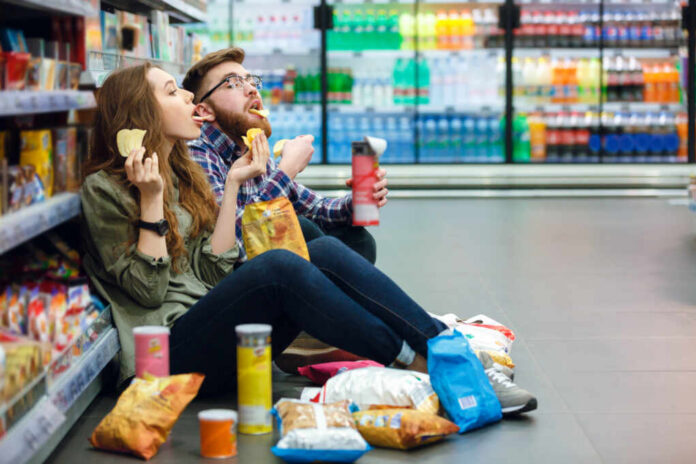
Some people seem “naturally” immune to junk food, but the secret is not stronger willpower – it is the world wrapped around their plate.
Story Snapshot
- Ultra-processed food intake tracks with school, home, and neighborhood setup more than grit or virtue.
- Kids eat more ultra-processed food when it is cheap, close, pushed at school, and eaten in front of screens.
- Food companies design and market these products to override normal fullness signals in the brain.
- People who eat fewer ultra-processed foods often live in environments that quietly make that choice easier.
Why Your “Disciplined” Friend May Just Live in a Different Food World
The friend who shrugs at chips and soda may look like a superhero of self-control. In many cases, they simply move through a different food world. A large study of Brazilian adolescents found that high ultra-processed food intake rose with easy access to these products at and around school, more screen time during meals, and less parental supervision, and varied by region of the country.[6] That is not a character flaw; that is an ecosystem at work around a teenager’s stomach.
The same research used a socio-ecological model, which means it looked at layers: the individual, the family, the school, and the wider region.[6][7] That approach echoes common sense. A child whose school canteen sells sodas and packaged snacks, whose bus stop has cheap fast food, and whose home has a television on during dinner will face a very different “default diet” than a child whose school and home center on cooked meals. One has to fight upstream. The other drifts with the current.
Ultra-Processed Food Is Engineered To Beat Your Brake Pedal
That still leaves the personal-responsibility question many conservatives care about: why not just say no? A National Institutes of Health trial put adults in a controlled setting and fed them two different diets, matched for calories and nutrients: ultra-processed versus minimally processed.[18] When people were allowed to eat as much as they wanted, they took in about 500 extra calories per day on the ultra-processed diet and gained weight, then lost weight when switched to the unprocessed one.[18]
This was not a willpower test. People were not told which diet was “bad,” and they got the same number of meals and time. Ultra-processed food’s texture, speed of eating, and additives likely changed how full people felt and how quickly they consumed each plate.[9][18] That lines up with reports that these products are deliberately engineered and marketed to be hyper-palatable – crunchier, sweeter, and easier to overeat than the traditional foods they replace.[5][10]
How Environment Quietly Sorts “Moderation” Winners and Losers
Personal responsibility matters, but responsibility assumes a fair shot at better choices. When neighborhoods are flooded with cheap ultra-processed products and lack access to fresh foods, low-income households get boxed into energy-dense, low-cost options.[20] Their “bad choices” often reflect rational tradeoffs under pressure: stretch the budget, feed everyone fast, and lean on what is on the corner shelf. Blaming willpower in that context punches down instead of solving the problem.
Research on food environments backs this up. A quasi-experimental study found that people in a “food oasis,” with supportive food surroundings, were over four times more likely to eat fruits and vegetables than those in a “food desert,” even after adjusting for demographics.[22] The environment variable was the single strongest factor in healthier intake.[22] Translate that to ultra-processed foods: if your daily path runs through school snack lines, gas stations, and dollar menus, you need far more discipline than someone whose default options are cooked meals and basic ingredients.
Why Cutting Ultra-Processed Foods Helps More Than Your Waistline
Ultra-processed foods do not just change waist sizes. A report on Brazilian diets over thirty years found that rising ultra-processed intake, especially ultra-processed meats, sharply increased environmental footprints.[1] Another analysis found that ultra-processed foods made up a smaller share of calories than their share of greenhouse gas emissions, land use, and energy demand.[3] In plain terms, we burn more planet than necessary to make foods that also push us toward obesity, diabetes, and other chronic disease.[14]
A food-systems review argues that ultra-processed products are not necessary for a complete diet; their dominance is a design choice of the modern supply chain, not a human need.[2][5] For readers who value stewardship and limited government, that raises a sharp question. Why should families bear full moral blame while large firms profit from products that harm health and the environment, especially when those products crowd out traditional, often local, foods? A more honest frame respects individual effort but stops pretending that grit alone explains who escapes the ultra-processed flood.
Sources:
[1] Web – Why Some People Naturally Eat Fewer Ultra-Processed Foods (Not …
[2] Web – Study first to suggest that increased consumption of ultra-processed …
[3] Web – A conceptual framework for understanding the environmental …
[5] Web – How bad is ultra-processed food for the planet? – Soil Association
[6] Web – Ultra-processed foods should be central to global food systems …
[7] Web – Individual and environmental factors affect the consumption of ultra …
[9] Web – Different Levels of Ultraprocessed Food and Beverage Consumption …
[10] Web – Why ultra-processed foods (UPFs) make us overeat, and what it …
[14] Web – Americans agree: Ultraprocessed foods pose major health hazard
[18] Web – A new six-month clinical study shows that eating minimally …
[20] Web – Multiple health and environmental impacts of foods – PNAS
[22] Web – Assessing Environmental Impacts of Different Dietary Patterns