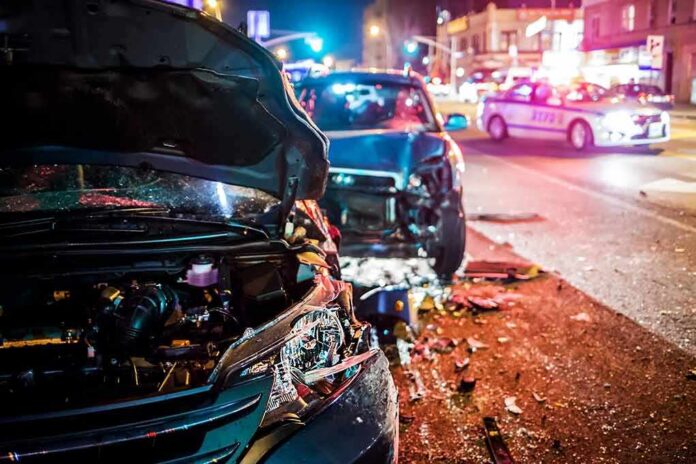
A car crash takes three seconds to happen and three months to sort out, which is exactly why what you do in the first ten minutes matters so much.
Quick Take
- Police treat every crash scene as evidence, recording vehicle details, witness statements, and scene conditions within hours.
- Real Las Vegas police releases show exactly what gets documented, from exact timestamps to injury descriptions.
- Official crash reports are not instantly public; drivers must request them through a formal records process.
- Even official statistics get revised later, so your own documentation matters as much as the police report.
Police Treat The Scene As Evidence The Moment They Arrive
Las Vegas Metropolitan Police Department officers do not just show up to clear traffic after a crash. Their releases show they log exact locations, approximate times down to the minute, witness statements, and physical scene evidence. One release about a pedestrian struck on Stewart Avenue near Nellis Boulevard recorded the collision down to 2:09 p.m. and tracked it as the 46th traffic death that year in their jurisdiction. That level of detail is the standard, not the exception.
Knowing officers collect this much detail should change how you behave at the scene. Take your own photos of vehicle positions, skid marks, traffic signals, and injuries before anything gets moved or cleaned up. Write down names and numbers of witnesses yourself. Police reports are thorough, but they are built from what officers can gather in a short window, and your notes can fill gaps later.
What A Real Crash Report Looks Like Behind The Scenes
A separate case out of East Sierra Vista Drive shows how deep these reports go. Investigators recorded vehicle information, medical transport details, scene measurements, and whether the driver showed signs of impairment, all while labeling the findings as preliminary and still under investigation. That word, preliminary, matters. Initial police conclusions about fault or cause can shift once toxicology results, additional witnesses, or reconstruction findings come in.
This means you should never accept an on-scene verbal explanation of fault as final, from police or the other driver. Stay calm, give a factual account, and avoid guessing about speed or blame in the heat of the moment. Let the investigation run its course. Your job at the scene is to preserve facts, not settle the case on the pavement.
Getting Your Hands On The Actual Report
Many drivers assume they can just pull up their accident report online within a day. They cannot. Las Vegas police direct anyone needing a traffic accident report to formally request it through the Records and Fingerprint Bureau. Build that into your post-crash checklist immediately: get the responding officer’s name and the case number before they leave the scene, so your records request does not stall out later.
Insurance adjusters, attorneys, and courts all rely on that official report as the backbone of any claim. Without the case number, tracking it down later becomes a slower, more frustrating process. A ninety-second conversation at the scene can save you weeks of phone calls afterward.
Why Even Official Numbers Keep Changing
Police departments openly admit their own statistics shift over time. Las Vegas police caution that published crash figures may change because of delayed deaths, toxicology reports, or other factors discovered after the fact. If the department’s own official counts are subject to revision, it makes sense that your individual case file could be amended too, as new medical or investigative information surfaces.
Speed is also a recurring factor police flag publicly, with national data showing roughly a third of fatal crashes involve speeding, a risk factor that climbs sharply with every extra mile per hour. That context matters after a crash too. If speed was involved, say so honestly in your statement, because toxicology and reconstruction findings will likely confirm or contradict it regardless of what anyone says in the moment.
The Bottom Line For Drivers
Treat the first hour after a crash like evidence collection, not damage control. Document everything yourself, get the case number, and understand that both the police report and any public statistics tied to it can be revised as new facts emerge. Patience and precision in those first minutes protect you far more than any quick explanation offered in the moment.
Sources:
artofhealthyliving.com, lvmpd.com