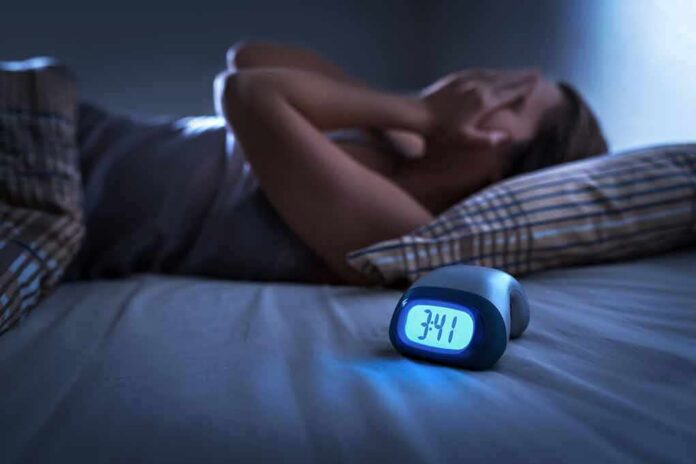
The simple act of watching the clock at night is quietly turning millions of sleepless Americans into more anxious, more medicated, and more exhausted versions of themselves.
Story Snapshot
- Research shows clock-watching during sleeplessness fuels worry and makes insomnia feel worse.
- Time monitoring behavior is linked to higher insomnia severity and more use of sleep medications.
- Experts now urge people to cover clocks and put phones away as a core insomnia strategy.
- Insomnia care highlights a bigger problem: people left to self-medicate instead of getting real help.
What Studies Say About Clock-Watching and Sleepless Nights
Sleep researchers have spent years asking a simple question: does staring at the clock change how badly insomnia feels? In one controlled study, people were told either to watch a clock as they tried to sleep or to watch a neutral device that did not show time. Those who watched the clock reported more worry before sleep and said it took them longer to fall asleep, even when objective sleep measures were mixed. Their sense of lost rest grew, even if their bodies were not sleeping that much worse.
A later review of insomnia misperception backed up this pattern. People with insomnia often misjudge their sleep, and clock-monitoring made that misjudgment stronger. Participants who tracked time at night tended to overestimate how long they lay awake and underestimate how much sleep they actually got. In simple terms, the more they watched the minutes tick by, the more convinced they became that their sleep was a disaster, which fed the next night’s fear.
Time Monitoring Behavior and the Push Toward Sleep Medications
Recent work on what experts call time monitoring behavior, the habit of checking the clock during the night, connects this worry loop to rising use of sleep drugs. In a large clinical study, clock-watching was common among people with insomnia and was linked to frustration about sleeplessness and more severe symptoms. The authors found that this frustration, stirred up each time people checked the time, helped drive them toward sleep aids rather than healthier long-term tools like therapy or lifestyle changes.
A summary of the same research explains the chain in plain terms: people worry they are not sleeping enough, they watch the clock, they stress more, and then they reach for pills. The relationship between time monitoring behavior and sleep medication use was significantly explained by how severe their insomnia had become. In other words, clock-watching makes insomnia feel worse, and worse-feeling insomnia makes drug use more likely. For many readers who already distrust how the health system leans on quick prescriptions, this may feel like one more example of a system managing symptoms instead of helping people change harmful habits.
Attention, Anxiety, and Why the Clock Becomes the Enemy
Other research looks at how people with insomnia pay attention to sleep-related cues. One study found that individuals with primary insomnia had trouble disengaging their focus from a clock compared with good sleepers. The clock became a magnet for their attention. Once awake, they were more likely to stare at the time and stay locked on it. Another eye-tracking study showed broader attention differences, supporting the idea that clock-watching is part of a bigger pattern of sleep-related hyper-focus and anxiety, not a random quirk.
Clinical writers describe this as cognitive arousal: racing thoughts, monitoring, and effort to control sleep that all push the brain into “fight-or-flight” mode. That state is the opposite of rest. When people lie in bed counting down the hours until the alarm, their bodies may release stress hormones that interfere with the ability to drift off. This cycle does not care if someone leans left or right politically; it simply punishes anyone who feels constant pressure to perform at work or care for family while running on empty.
What Sleep Clinicians and Educators Now Advise
Because of this evidence, many insomnia programs now give a simple but strict rule: remove or cover all time cues at night. One clinician guide tells patients to turn clocks around, take off watches, shut down phone tracking apps, and even ask partners to stop asking how long they slept. The goal is to shift focus away from hours and minutes and toward how a person feels during the day. This advice is not a magic cure, but it is meant to break the habit of self-monitoring that keeps anxiety high.
Popular articles and sleep doctors now echo the same message. They urge people to keep phones and smart watches out of reach, cover bedside clocks, and replace late-night time checking with quiet activities or simple breathing exercises when sleep will not come. One summary of behavioral sleep medicine notes that clock-monitoring tends to increase pre-sleep anxiety and worry, worsening sleep quality for many people. For citizens who feel that modern tech and 24/7 work culture already invade every corner of life, it is striking that even the digital clock may be part of what keeps them awake.
Insomnia, Self-Help, and a System That Leaves People on Their Own
These clock-watching findings fit a larger story about how our society handles stress and health. Insomnia affects tens of millions, yet access to high-quality counseling and sleep therapy is limited and expensive. Many people turn instead to over-the-counter pills, alcohol, or internet tips. Studies linking time monitoring behavior to worse insomnia and more medication use show how easy it is for normal worries to slide into chronic problems. People are told to “manage” their sleep on their own while the systems around them stay the same.
This can feel like one more sign that the country’s institutions are not dealing with root causes. Long work hours, economic pressure, constant screens, and thin mental health support all make sleep harder. Then, when people cannot sleep, the answer is often another pill and a reminder to try a simple trick like turning the clock around. The research on clock-watching is solid enough to suggest a real, helpful step, but it also quietly points to a deeper reality: Americans are being asked to fix their own sleeplessness inside a culture that keeps them wired, worried, and awake.
Sources:
docs.google.com, pubmed.ncbi.nlm.nih.gov, sciencedaily.com, pmc.ncbi.nlm.nih.gov, psychiatrist.com, insomnia.sleep-disorders.net