That tired, droopy look in your eyes might not come from a bad night’s sleep at all. Doctors have a name for it, and it’s a real eyelid condition that gets more common as people age.
Quick Take
- Doctors call persistent droopy, tired-looking eyes “acquired blepharoptosis,” a real eyelid condition, not just fatigue.
- The most common cause is a stretched or loosened muscle tendon in the eyelid, often linked to aging.
- One large patient study found ptosis in at least one eye in 73.4% of people seen at eye clinics.
- Doctors treat it with surgery or a prescription eye drop, but the right fix depends on the exact cause.
What Doctors Mean By A Tired Eye
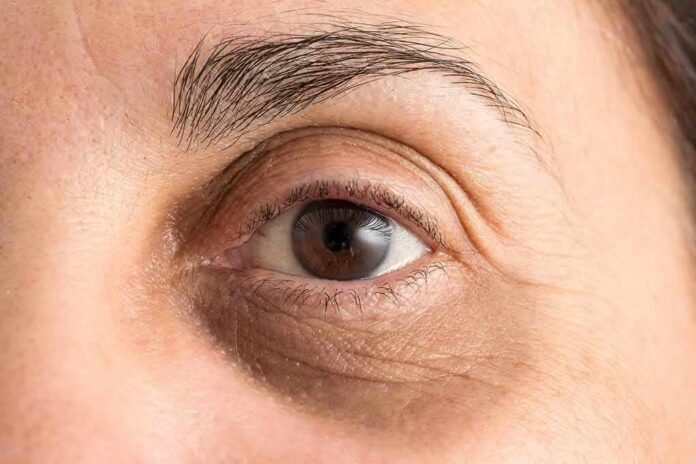
Eye doctors use the term blepharoptosis, or ptosis for short, to describe an upper eyelid that droops lower than normal. The American Academy of Ophthalmology notes patients often describe the affected eye as looking small, tired, or even blocking part of their vision, sometimes along with headaches. That everyday complaint of looking exhausted lines up with an actual, measurable eyelid position problem doctors can check in an exam.
Ptosis that develops later in life is called acquired ptosis, and it is the most common form doctors see in adults. A 2021 medical review defines it as abnormal drooping of the upper eyelid that was not present at birth. Unlike congenital ptosis, which babies are born with, acquired ptosis creeps in over time and often gets blamed on being tired or getting older, when it is actually a specific physical change in the eyelid.
The Muscle Tendon Behind The Droop
The most common reason for this droop has a clear anatomical explanation. The muscle that lifts your upper eyelid connects to the eyelid through a tendon called the levator aponeurosis. Over years, that tendon can stretch, loosen, or pull away from the eyelid, a process doctors call aponeurotic ptosis. The academy identifies this as the leading cause of mild to moderate ptosis in older adults.
This is not a condition doctors just eyeball and guess about. The academy’s evaluation guidance calls for checking eyelid height, how far the eye opens, how well the lifting muscle works, pupil size, eye movement, and even facial sensation. That thorough check matters because droopy eyelids can sometimes point to muscle, nerve, or structural problems beyond simple aging, so doctors rule out those possibilities before settling on a diagnosis.
How Common Is This Really
A 2024 study of patients at United States eye clinics found ptosis affecting at least one eye in 73.4% of those examined, with uneven eyelids in 25.5%. That number sounds staggering, but it reflects people already visiting eye doctors, not a random sample of the general population. Separate research estimates ptosis affects somewhere between 4.7% and 13.5% of adults overall, depending on how researchers define and measure it.
That gap matters. It tells us ptosis is genuinely widespread, but it does not mean three out of four people walking around have it. The clinic-based number is useful for doctors treating patients who already suspect something is wrong, not as a blanket statistic for how many Americans have tired-looking eyes right now.
Treatment Options That Actually Work
Good news for anyone worried they are stuck with the look forever: doctors have real treatment options. For patients whose lifting muscle still works reasonably well, surgeons can perform levator aponeurosis advancement, essentially reattaching and tightening the stretched tendon. For patients with weaker muscle function, a frontalis sling procedure connects the eyelid to the forehead muscle so blinking and lifting still happen.
There is also a nonsurgical route. A prescription eye drop called oxymetazoline, sold as Upneeq, is approved to treat acquired blepharoptosis in adults by temporarily lifting the eyelid without surgery. It will not fix the underlying tendon problem, but it offers a quick option for people who want results without going under the knife.
Why This Deserves A Real Diagnosis, Not A Guess
Here is the practical takeaway for anyone staring in the mirror wondering why they look permanently exhausted. A tired appearance can come from ptosis, but it can also come from excess eyelid skin, a dropped eyebrow, dry eyes, poor sleep, or in rarer cases a muscle or nerve condition. Getting an actual eye exam beats guessing, because the right fix depends entirely on what is truly causing the droop.
Sources:
mindbodygreen.com, eyewiki.aao.org, onlinelibrary.wiley.com