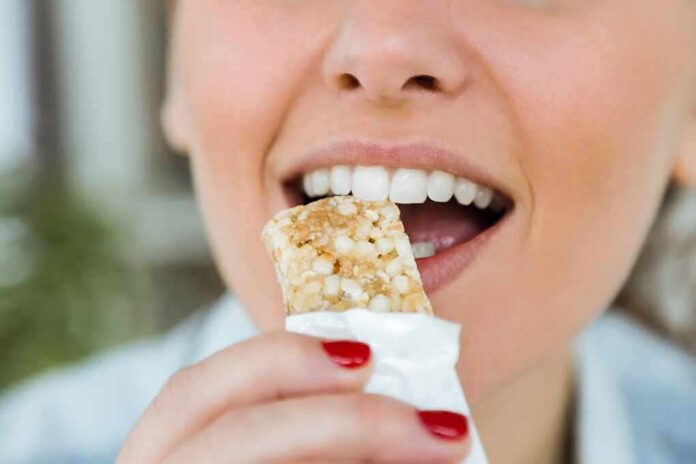
Sugar-free protein bites can still raise skin questions because the protein inside them may matter more than the label on the front.
Quick Take
- “Sugar-free” does not automatically mean skin-friendly, especially in packaged protein snacks.
- The strongest evidence points to whey protein and protein supplements, not to sugar-free bites as a separate food category.
- Studies have linked protein-calorie supplements with acne flare-ups in some young adults.
- High sugar intake is also tied to acne and faster skin aging, but reducing sugar is not proven to help every person’s skin the same way.
What Dermatologists Mean by “Bad for Skin”
Dermatologists usually mean acne, redness, inflammation, and faster signs of aging. Sugar can play a role through blood sugar spikes and glycation, a process that can stiffen collagen and elastin. That does not mean every sweet food damages skin in the same way. It means the dose, the type of sugar, and the rest of the diet all matter.
That is why sugar-free protein bites sit in a gray zone. They may avoid the sugar problem, but they can still contain protein powders, dairy-based ingredients, or other additives that some people do not tolerate well. The snack itself is not the same thing as a simple homemade fruit-and-nut bite. Packaged versions often have a longer ingredient list and more variables.
Why Protein Can Be the Bigger Issue
The clearest skin concern in this story is whey protein. A review on sports supplements says severe new acne, flare-ups of existing acne, seborrhea, androgenetic alopecia, and hirsutism are known to be associated with whey protein supplementation. Another clinical study found a significant association between protein-calorie supplements and the onset or worsening of acneiform lesions over two months. That does not prove every protein bite causes breakouts, but it does explain why acne-prone people often pay close attention.
Some experts and health outlets also note that whey and casein protein powders have been linked to acne in some people, while others show no clear effect. This is the part many shoppers miss. A snack can be sugar-free and still be built around ingredients that may push breakouts in sensitive users. For people with stubborn acne, the ingredient list matters more than the marketing claim.
What Sugar Still Does to Skin
Sugar is not harmless for skin, either. Multiple dermatology sources say high sugar intake can worsen inflammation, acne, and signs of aging through glycation and blood sugar swings. One review says excessive sugar consumption is associated with a higher risk of acne, while a low glycemic index diet may improve skin appearance. Another source notes that lowering simple sugars is often linked to better overall skin health.
Even so, the evidence is not perfect. One skin-health review says there is no conclusive proof that dietary sugars directly cause wrinkles or acne in healthy people, and that evidence for acne improvement from removing sugar is still insufficient. That is the honest middle ground. Sugar can be part of the problem, but it is not the only one, and it is not a guaranteed trigger for everyone.
What This Means for Sugar-Free Protein Bites
The practical answer is simple. Sugar-free protein bites are not automatically bad for your skin, but they are not automatically safe either. If they rely on whey protein, milk-based powders, or heavy sweeteners and fillers, they may still bother acne-prone users. If they are made from nuts, seeds, and lower-glycemic ingredients, they may fit better with a skin-conscious diet.
For most people, the smartest approach is to watch your own skin, not just the package label. If breakouts flare after protein-heavy snacks, the protein source deserves a closer look. If your skin worsens after lots of sugar, that is another clue. Dermatology does not give one rule for everyone here. It gives a pattern: sugar can irritate skin, whey can irritate skin, and the same snack can be fine for one person and rough for another.
Sources:
dermatologytimes.com, health-and-wellness.net, loseit.com, pmc.ncbi.nlm.nih.gov, us.typology.com, instagram.com, continentalhospitals.com, timesofindia.indiatimes.com, shopflavcity.com, wsro.org, lifemadesweeter.com, consalud.es, myprotein.es, dermalegre.com