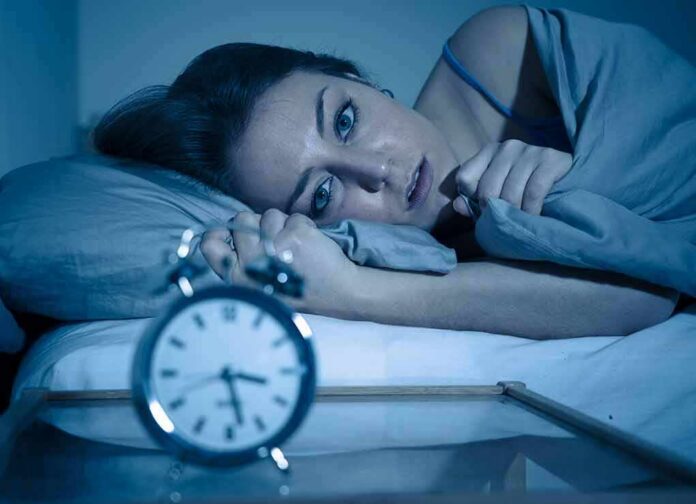
The nightcap and the bedtime cannabis gummy share the same flaw: both buy a faster trip into sleep by borrowing against the quality of the sleep that follows, and the debt comes due in fragmented nights, blunted mornings, and a nervous system that no longer knows how to fall asleep on its own.
Key Points
- Alcohol and cannabis can shorten the time it takes to fall asleep, but both substances degrade sleep architecture later in the night — more awakenings, less REM, worse continuity.
- The effect is dose- and pattern-dependent: occasional light use behaves differently than nightly, escalating use, and tolerance builds quickly with both substances.
- Researchers distinguish three separate outcomes — feeling sleepy, actually sleeping well, and functioning the next day — and the substances often help with the first while hurting the other two.
- Regular sleep-aid use of either substance is linked to elevated risk of dependence, and cannabis-for-sleep users show roughly double the odds of worse sleep quality six months later.
- Adolescents and young adults face amplified risk, both because their sleep architecture is still developing and because this pattern of use is documented as increasingly common in that age group.
Why a Depressant Feels Like a Sleep Aid but Isn’t
Alcohol and cannabis both belong to a class of substances that pharmacologists call CNS depressants in effect, even though their mechanisms differ sharply at the receptor level. Alcohol slows neural firing broadly, producing the familiar heaviness that makes the couch feel like an invitation. Cannabis, largely through THC’s action on cannabinoid receptors, can produce a similar subjective drowsiness. In both cases, the sedation is real — but sedation and sleep are not the same physiological event, and treating them as interchangeable is where the trouble in “using a substance to sleep” actually starts.
A July 2026 Time report captured the core problem in language sleep researchers have used for years: these substances offer “a cheap trick.” They can make a person feel sleepy quickly, but they “don’t produce the kind of restorative sleep humans need to function well,” and researchers cited in the piece warn that regular use “weakens healthy sleep” while raising dependence risk. That framing matters because it separates the sensation of sedation from the substance of rest — a distinction borne out repeatedly in polysomnography and daily-diary studies conducted independently of any single news report.
What Happens Inside the Sleep Cycle
Alcohol’s damage is best documented and most consistent across the literature. It reduces the time it takes to fall asleep and can consolidate the first half of the night, but as it metabolizes, it disrupts sleep-stage transitions, increases nighttime awakenings, and can trigger sleep-related breathing problems. One frequently cited summary puts it plainly: alcohol “tricks your body into falling into deep sleep faster than it normally would,” pushing more time into slow-wave sleep early on at the direct expense of REM sleep later — the stage most associated with memory consolidation and emotional processing. The net result, confirmed across polysomnography and self-report studies alike, is fragmented sleep, earlier waking, and reduced overall sleep duration despite a faster onset.
Cannabis follows a related but distinct pattern. Some daily-diary research finds that nights of cannabis use for sleep predict longer same-night sleep duration and fewer minutes awake after sleep onset — a genuine short-term benefit — but the same studies find greater next-day fatigue as a consistent trade-off. Clinician-facing reviews add a further wrinkle: subjectively, users often feel cannabis helps them fall asleep faster, but objective monitoring in controlled studies tends to show the opposite — longer sleep-onset time and more nighttime awakenings once the drug is administered under observation rather than self-selected. That gap between what users report and what sensors record is one of the more important, and more consistently reproduced, findings in this entire body of research.
Where the Evidence Genuinely Splits
Not every study lands in the same place, and an honest accounting has to say so. Some daily-life research finds cannabis-only use nights associated with longer sleep duration than alcohol-only, co-use, or no-use nights, with no significant difference in reported sleep quality across conditions. Other work finds cannabis use “was not independently associated with sleep” duration or quality at all, though it modestly softened alcohol’s negative effects when the two were used together. A separate daily-diary study reported that participants felt they slept better after cannabis-only or co-use nights compared to no use, but not after alcohol-only nights. These are not contradictions born of sloppy science; they reflect real variation in dose, frequency, cannabis potency, individual tolerance, and whether sleep was measured subjectively or with instruments.
What almost none of this literature disputes is the trajectory of regular, escalating use. A study following adolescents found that using cannabis for sleep was associated with roughly double the likelihood of worse sleep quality six months later. Longitudinal and daily-level work on alcohol is even more uniform: heavier, more frequent alcohol use for sleep correlates with progressively worse perceived sleep health over time, even as light or occasional cannabis use showed the opposite direction in some day-level models. The pattern researchers keep converging on is that acute, occasional use and chronic, dependent use behave like two different phenomena — and most people who start using a substance “just to sleep” don’t stay in the occasional category for long.
Tolerance, Dependence, and the Rebound Problem
The mechanism behind long-term harm is tolerance. As the body adapts to nightly alcohol or cannabis exposure, the sedating effect weakens, pushing users toward higher doses to achieve the same onset speed — the same trajectory that underlies dependence in other sedative-hypnotic classes. Addiction researchers estimate roughly one in ten cannabis users overall develops a cannabis use disorder, with the rate climbing to about one in six among those who start using as adolescents or young adults. Alcohol’s dependence profile for sleep is arguably worse-documented still: self-reported clinical insomnia affects an estimated 35 to 70 percent of people with alcohol use disorders, and as alcohol tolerance builds, its sedative-hypnotic effect diminishes even as the sleep-disrupting effects persist or worsen. This is the rebound trap — the substance stops working as a sleep aid long before it stops interfering with sleep.
Young adults are a particular focus of current research, not because their physiology is uniquely fragile but because survey data shows the behavior is common and apparently rising: more than one in five young adults report using cannabis or alcohol specifically to fall asleep, according to research highlighted by the University of Michigan’s Institute for Social Research. Megan Patrick, a researcher at that institute, put the mechanism in plain terms: these substances “can interfere with the ability to stay asleep and with the quality of sleep,” and “appear to actually disrupt sleep in the long term” even when they seem to help in the moment. Adolescents carry added risk because sleep architecture, particularly REM-dependent processes tied to learning and emotional regulation, is still maturing during those years.
What This Means for Anyone Reaching for a Nightcap or a Gummy
None of this argues that an occasional glass of wine or an occasional low-dose edible will wreck a person’s sleep permanently — the evidence on light, infrequent use is genuinely mixed, and some daily-level data even shows modest short-term benefits for cannabis specifically. The consensus argument is narrower and more durable: using either substance as a routine sleep strategy trades a faster path to unconsciousness for worse sleep architecture, diminished next-day function, and a real risk of tolerance and dependence that compounds over months and years. Clinicians and researchers across this literature converge on the same practical recommendation — treat both as poor substitutes for addressing the underlying causes of insomnia, whether behavioral, medical, or circadian, rather than as tools to manage it nightly.
"While cannabis and alcohol may seem to assist in sleep, these substances offer a cheap trick," writes Joan M. Cook https://t.co/hlYheloCrE
— TIME (@TIME) July 31, 2026
Sources:
time.com, pmc.ncbi.nlm.nih.gov, recoveryanswers.org, powershealth.org, sciencedirect.com, pubmed.ncbi.nlm.nih.gov, cancerhealth.com, wellness.ucsb.edu, auckland.ac.nz, cannabisevidence.org, recovered.org