The important point is not that a microbe has magically solved PFAS cleanup; it is that University of Nebraska–Lincoln researchers have now shown a living organism can meaningfully interact with one of the most stubborn “forever chemicals” in a controlled lab setting, which is a real scientific advance even if it is not yet a field-ready remedy.
Intro Header
- UNL researchers report that Rhodopseudomonas palustris absorbed and removed about 44% of PFOA from the test medium in 20 days.
- The work does not show complete destruction of PFAS; much of the chemical later reappeared, likely after cell lysis.
- The significance lies in mechanism: the bacterium appears to trap PFOA in its membranes before any broader transformation can be engineered.
- The result fits a long-running pattern in PFAS science: promising biological signals in the lab, severe limits in the real world.
What Nebraska Researchers Found
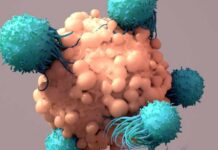
University of Nebraska–Lincoln scientists working in the labs of Rajib Saha and Nirupam Aich reported that the photosynthetic bacterium Rhodopseudomonas palustris can interact with perfluorooctanoic acid, or PFOA, one of the most persistent members of the PFAS family. In their lab experiments, the bacterium removed roughly 44% of PFOA from the medium within 20 days, a result significant enough to place it squarely in the small but growing literature on microbial PFAS interaction. The study was published in Environmental Science: Advances, which gives the work a formal peer-reviewed footing rather than the status of a preliminary campus announcement.
The mechanism matters as much as the number. UNL’s account says the bacterium absorbs PFOA into its cell membrane, and that the process shifts over time rather than ending in simple disappearance. That distinction is central to understanding the finding: the organism is not presented as a clean biological shredder of fluorinated carbon chains, but as a system that can sequester, bind, or partially transform the molecule under laboratory conditions. In environmental remediation, that is an early-stage observation with promise, not a turnkey treatment train.
Why This Result Got Attention
PFAS have earned their grim nickname because the carbon-fluorine bond is among the strongest in organic chemistry; that is why these compounds persist in water, soil, and living systems long after their industrial usefulness is over. For years, remediation has therefore leaned heavily on separation technologies such as adsorption and filtration, or on destructive methods that tend to be expensive, energy-intensive, or difficult to scale. A biological route is attractive precisely because it suggests a potentially cheaper, self-propagating, and lower-energy alternative. That is the dream, and it is a reasonable one.
But the PFAS literature has also taught a hard lesson: lab-scale biological promise often outruns field practicality. Reviews of microbial PFAS work continue to describe biological approaches as limited, not broadly viable, and in many cases not yet capable of fully biodegrading the parent chemicals. This is why the Nebraska result should be read as a meaningful step in mechanism discovery rather than as evidence that wastewater utilities can soon hand PFAS treatment over to microbes.
How It Fits the Broader PFAS Science
This is not the first time researchers have found a biological signal around PFAS. Earlier studies and reviews have described microorganisms that can biotransform select PFAS, while others show adsorption or accumulation rather than true degradation. Recent work on gut bacteria, for example, shows PFAS can bioaccumulate rapidly and at high capacity inside bacterial cells, underscoring how easily these compounds can partition into biology without necessarily being destroyed. That matters because a microbe that concentrates PFAS is not the same thing as a microbe that eliminates risk.
The Nebraska study therefore belongs to a broader scientific pattern: first observe uptake, then map the chemistry, then ask whether the organism can be engineered to push the process further. UNL itself says the team is already exploring follow-up work involving microbial engineering and synthetic biology to enhance degradation potential. That is the correct order of operations. In PFAS research, the path from “interesting interaction” to “usable remediation platform” typically runs through mechanism, enzyme identification, metabolic engineering, and only then, if the chemistry cooperates, pilot-scale validation.
The Real Limitation: Removal Is Not Destruction
One reason this study has to be interpreted carefully is that the reported PFOA reduction did not hold in a simple linear way. UNL says much of the PFOA was later released, likely because of cell lysis, and the researchers themselves frame the work as a stepwise mechanism rather than complete degradation. That is a sophisticated finding, not a failure. It shows that the bacterium can engage with PFOA in a way that changes its distribution in the system. It does not yet show mineralization, the point at which the compound is broken down into harmless end products.
That distinction is the whole ballgame. In remediation, sequestration buys time; destruction ends the problem. A technology that merely moves PFAS from water into biomass, membranes, sludge, or another reservoir can still have utility, but it also creates a downstream management question that must be answered honestly. The Nebraska work sits on the sequestration side of that line, with the possibility of future transformation still open but unproven.
What It Means for the Future of PFAS Cleanup
The practical consequence of this research is not an imminent microbial cleanup revolution. It is a sharper set of hypotheses. If Rhodopseudomonas palustris can be made to hold onto PFOA more stably, or if the responsible transporters and enzymes can be identified and enhanced, then biology may eventually contribute to a hybrid PFAS-treatment system alongside adsorption, membranes, or catalytic destruction. That hybrid model is where the field is most likely to make progress: biological recognition or uptake on one side, engineered destruction on the other.
For now, the Nebraska result should be valued for what it actually is: a credible, peer-reviewed demonstration that a common photosynthetic bacterium can interact with a notorious PFAS compound in a way that warrants further work. In the long history of PFAS remediation, that is a genuine milestone. It is also exactly where many promising ideas have stopped before. Whether this one moves beyond the lab will depend on whether the biology can be turned from temporary capture into durable chemical breakdown.
Sources:
docs.google.com, youtube.com, naturalnews.com, waterforfood.nebraska.edu, pubs.acs.org, cen.acs.org, pubs.rsc.org, pubmed.ncbi.nlm.nih.gov, scientificamerican.com, sciencedaily.com, rsc.org, sciencedirect.com, doaj.org, onlinelibrary.wiley.com