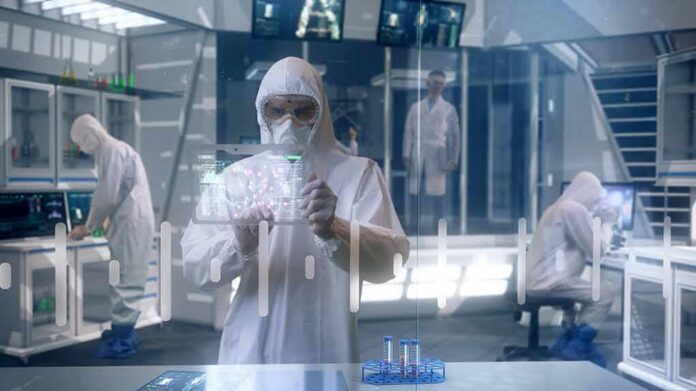
Hospital emergency rooms may soon have a built-in nose that sniffs out dangerous germs before patients ever get sick.
Quick Take
- Mayo Clinic is leading a new project called HAIQU, short for Hospital Air QUality: Breathing Life into Patient Care.
- The federal government’s Advanced Research Projects Agency for Health (ARPA-H) is funding the work with up to $40 million.
- Biosensors will scan emergency room air for viruses, bacteria, fungi, mold, and allergens in real time.
- Testing will roll out at Mayo campuses in Minnesota, Arizona, and Florida, with partners Siemens, Metalmark, and the University of Minnesota.
A Hospital That Can Smell Trouble Before It Spreads
Mayo Clinic will lead the Hospital Air QUality project, known as HAIQU, with funding of up to $40 million from ARPA-H, a research arm of the U.S. Department of Health and Human Services. The goal is simple to describe but hard to build: catch dangerous airborne germs the moment they appear, before they spread through a busy emergency room full of sick and vulnerable patients.
The system relies on biosensors built with microfluidic droplet CRISPR technology, a gene-editing tool repurposed to spot tiny genetic signatures of pathogens floating in the air. Artificial intelligence then reads the sensor data and judges how risky the air actually is. When danger spikes, automated systems respond on their own, adjusting filtration or airflow without waiting for a human to notice a problem first.
Siemens and Metalmark are working alongside Mayo on the engineering and deployment side of the project. The University of Minnesota’s engineers are designing the actual air-sampling hardware, the devices that physically pull particles and pathogens out of the air so the biosensors have something to analyze. That division of labor spreads a massive technical challenge across institutions built to handle different pieces of it.
Early testing will happen in emergency departments at Mayo Clinic locations in Rochester, Minnesota, Jacksonville, Florida, and Phoenix, Arizona. Emergency rooms make sense as a starting point. They see a constant churn of contagious patients, immune-compromised visitors, and staff moving in and out, all breathing the same recycled air for hours at a time.
Part Of A Bigger Push To Rethink What Buildings Can Do
HAIQU is one piece of ARPA-H’s larger BREATHE program, which stands for Building Resilient Environments for Air and Total Health. The program envisions smart buildings nationwide that constantly monitor air quality and react to problems automatically, rather than relying on workers to test air samples once in a while and wait days for lab results.
Four research teams received BREATHE awards in total, each tackling a different kind of building and risk profile. The program is structured in phases. Phase one gathers baseline data by hand from real facilities. Phase two moves into controlled chamber testing. Phase three deploys the technology in the field and validates whether it actually works.
That staged approach matters because it shows these autonomous air biosensors do not exist yet in finished form. ARPA-H’s own program documents describe the work as development and validation, ending in a real-world efficacy trial rather than a product ready for every hospital tomorrow.
Mayo Clinic is building an early warning system for airborne viruses, bacteria, fungi and allergenshttps://t.co/fjuCYKXbeT
— B. (@verygoodchat) October 20, 2026
Bioaerosols, the scientific term for airborne particles like viruses, bacteria, fungi, and allergens, are already linked to asthma and other breathing problems in medical research. Mayo’s infectious disease experts note that pneumonia alone can come from a bacterium, a virus, a fungus, or a parasite, which shows how many threats a single sensor system would need to catch. Building a tool that reliably tells those apart in real time, cheaply enough for hospital-wide use, is the real engineering mountain here.
If HAIQU succeeds, the payoff could reach beyond hospitals. Cleaner, smarter-monitored air in emergency rooms could cut hospital-acquired infections, protect staff, and give patients with weak immune systems a safer place to recover. For a health system still shaped by the lessons of recent pandemics, a building that can sense a threat in the air and act on it instantly is not a small upgrade. It is a fundamentally different way of thinking about patient safety.
Sources:
youtube.com, facilitiesdive.com, pmc.ncbi.nlm.nih.gov, cmmonline.com, mayo.edu, news.siemens.com, arpa-h.gov