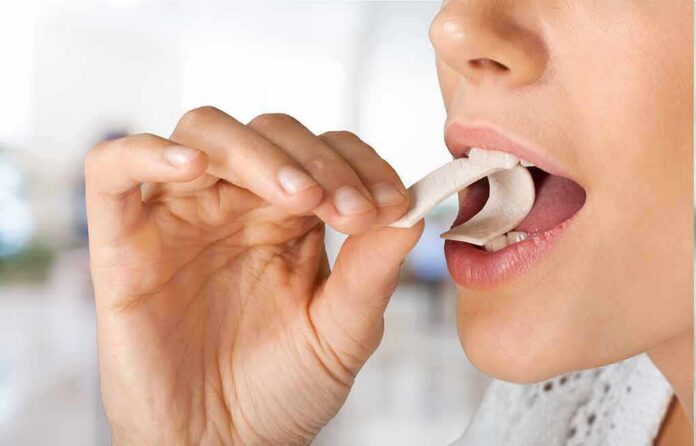
A laboratory finding that a chewing gum extract can strip away 93% of the human papillomavirus present in a cancer patient’s saliva sample is genuinely remarkable — but the operative word is sample, not patient, and that distinction is the whole story here.
Key Points
- A peer-reviewed study in Scientific Reports found that a bean-gum extract aggregated HPV in roughly 93% of tested saliva samples from head and neck cancer patients, with viral load reductions of 86–95% after a single application.
- Adding a peptide called protegrin-1 to the gum formulation cut two bacteria linked to oral cancer, Porphyromonas gingivalis and Fusobacterium nucleatum, by more than 99% in saliva and oral-rinse specimens.
- The University of Pennsylvania research team behind the work, led by Dr. Henry Daniell, has been candid that in vivo human trials are the necessary next step before any clinical or commercial claim is warranted.
- The strongest antibacterial numbers belong to a combined gum-plus-protegrin formulation, not the bean gum alone — a distinction worth holding onto as coverage of this research spreads.
What The Study Actually Measured
The research, published in Nature’s Scientific Reports and authored by a team at the University of Pennsylvania School of Dental Medicine, describes itself precisely: an “ex vivo HNSCC clinical study” — HNSCC being head and neck squamous cell carcinoma — using saliva and oral-rinse specimens collected from cancer patients. Researchers exposed those specimens to extracts of a chewing gum engineered from lablab bean protein, then measured what happened to the microbes riding along in the fluid. In 13 of 14 evaluated saliva samples, the bean-gum extract caused HPV particles to aggregate — essentially clump together — and in the oral-rinse specimens from HPV-positive patients, aggregation reached 100%.
Beyond aggregation, the team measured viral load directly and found that a single application of the bean-gum extract reduced HPV viral load in untreated salivary samples by 86% to 95%, a result the authors describe as highly significant statistically. Separately, when researchers added protegrin-1 — a naturally occurring antimicrobial peptide — to the gum formulation, the combination knocked down two bacteria strongly associated with periodontal disease and oral cancer risk, Porphyromonas gingivalis and Fusobacterium nucleatum, by more than 99% across 42 samples. Independent reporting from WHYY, the Philadelphia public radio outlet that interviewed lead researcher Dr. Henry Daniell, corroborated these same figures and situated the work squarely within Penn’s dental research program.
Why HPV And Oral Cancer Are Linked In The First Place
To appreciate why this research matters, it helps to understand the underlying medical problem. HPV, best known as the virus behind cervical cancer, is also a well-established driver of a rising share of oropharyngeal and head-and-neck cancers, transmitted through oral contact and capable of persisting silently in tissue for years before triggering malignant changes. Epidemiological research going back decades has tied oral HPV infection, alongside risk factors like tobacco and betel-quid chewing, to elevated rates of oral squamous cell carcinoma. Unlike cervical HPV, which benefits from decades of Pap-smear screening infrastructure, oral HPV has no equivalent routine surveillance — which is precisely why a low-cost, easy-to-distribute intervention like a chewing gum has such intuitive appeal to researchers and the public alike.
The gum itself is bioengineered from a lectin protein called FRIL, derived from the lablab or hyacinth bean, a plant already studied for antiviral properties. Daniell’s lab has spent years developing plant-based bioengineering platforms for therapeutic proteins, and this gum represents an attempt to deliver that antiviral protein directly to the site where HPV transmission and persistence occur — the mouth — rather than through injection or systemic medication. Penn’s own dental school news office has publicly described the formulation as carrying antiviral, antibacterial, and antifungal properties, a multi-pronged design intended to address the several microbial contributors to oral cancer risk simultaneously, not HPV alone.
The Gap Between A Strong Lab Signal And A Proven Treatment
Here is where an informed reader should slow down. Every one of the headline figures — the 93% aggregation, the 86–95% viral load drop, the greater-than-99% bacterial kill — comes from specimens tested outside the body, in laboratory conditions, not from patients who chewed the gum over time and were then re-tested. That is not a hidden flaw; it is exactly how the study describes itself, and the research team has not claimed otherwise. No data yet exist on what happens when a person actually chews this gum: how much protein reaches the relevant tissue, how saliva production and swallowing affect exposure, whether repeated use is safe over weeks or months, or whether reducing viral load in a sample translates into clearing an actual infection in a living patient.
UPSDM researchers report that a bioengineered chewing gum can lower levels of microbes associated with HNSC cancerhttps://t.co/HCU5Lv4cXA pic.twitter.com/rrvKJfpcCv
— American Elements (@AmericanElement) August 3, 2026
What Would Turn This Into A Clinical Reality
The path from this result to a product on a pharmacy shelf runs through several well-worn checkpoints that biomedical research always must clear. First is a registered in vivo trial — a phase 1/2 study in which real patients chew the gum under monitored conditions, with researchers tracking safety, adverse events, and whether oral HPV levels actually drop over time using standardized PCR testing. Second is independent replication: a separate lab, working with its own patient samples, reproducing the aggregation and viral-load results without involvement from the original team. Third is fuller disclosure of the gum’s exact composition, manufacturing process, and dosing behavior, which would let outside scientists evaluate the work on its full merits rather than summary figures alone.
None of these steps are exotic hurdles; they are the standard sequence every promising laboratory compound must pass through, and the Penn team has been forthright that the gum is not commercially available and that these next stages are still ahead. That candor matters. Ex vivo results this strong are the reason pharmaceutical and biotech pipelines exist — they are the signal that justifies the enormous cost of a proper clinical trial — but they are a beginning, not a verdict. The public should read a 93% figure as a genuinely exciting reason to fund and run the next study, not as evidence that oral cancer risk has already been solved with a stick of gum.
Sources:
ecancer.org, x.com, whyy.org, nature.com, pmc.ncbi.nlm.nih.gov, pubmed.ncbi.nlm.nih.gov