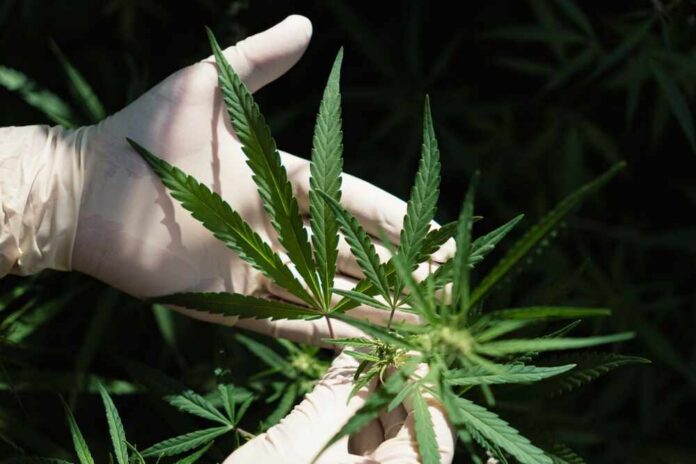
The part of cannabis that makes it smell like lemons and pine may turn out to be a better painkiller than the part that gets you high.
Quick Take
- University of Arizona researchers found four cannabis-derived terpenes relieved pain in mice without any psychoactive effects.
- Geraniol worked best, followed by linalool, beta-caryophyllene, and alpha-humulene — all found naturally in cannabis plants.
- The compounds appear to work through a receptor that caffeine also targets, hinting at a possible sedative side effect worth watching.
- The findings are promising but still limited to animal studies — human trials have not yet been done.
The Cannabis Compounds That Have Nothing to Do With Getting High
Terpenes are the aromatic compounds that give plants their smell and taste. They are in lavender, rosemary, citrus peels, and yes, cannabis. For years, researchers focused almost entirely on tetrahydrocannabinol (THC) and cannabidiol (CBD) when studying cannabis for pain. Terpenes were mostly ignored. That is starting to change, and the early results are hard to dismiss.
University of Arizona Health Sciences researchers tested four terpenes found in moderate to high levels in cannabis: geraniol, linalool, beta-caryophyllene, and alpha-humulene. They applied each compound to mouse models of fibromyalgia and post-surgical pain. All four produced strong pain relief. Geraniol delivered the best results, followed by linalool, then beta-caryophyllene and alpha-humulene. The pain-relieving effects lasted roughly two hours. None of the compounds caused psychoactive effects. The findings were published in the journal Pharmacological Reports.[8]
How These Compounds Actually Work in the Body
The mechanism behind the pain relief points to something called the adenosine A2a receptor. This is the same receptor that caffeine targets and blocks, which is part of why coffee makes you feel alert. When terpenes activate this receptor instead of blocking it, the result appears to be pain relief. Researchers confirmed this by giving mice a drug that blocks the adenosine A2a receptor — when they did, the terpenes stopped working. That is solid evidence of a real biological pathway, not a coincidence.[1]
There is also a potential sedative angle here that researchers have not fully mapped yet. Since the adenosine A2a receptor plays a role in sleep and relaxation, activating it could carry calming effects alongside pain relief. That is not necessarily a problem, but it is a variable that human trials will need to measure carefully. For people with fibromyalgia who already struggle with sleep, a compound that eases pain and promotes rest could actually be a feature, not a flaw.[8]
Why This Research Matters for the 50 Million Americans Living With Chronic Pain
Roughly 50 million Americans deal with chronic pain. Opioids remain the most commonly prescribed heavy-duty option, but they come with addiction risk, overdose danger, and a long list of side effects. THC relieves pain but alters thinking and is still federally restricted. The search for a non-addictive, non-psychoactive painkiller that actually works has been going on for decades. Terpenes, which already have Generally Recognized as Safe status from the Food and Drug Administration (FDA), could be a rare candidate that clears the safety bar before the efficacy bar.[14]
What the Science Cannot Yet Claim
Here is the part that deserves equal weight: every result described above came from mice, not people. A thorough review of the existing literature puts it plainly — there is little solid clinical evidence that animal findings translate to humans. The review calls for rigorous, placebo-controlled human trials using defined terpenes, defined doses, and defined delivery methods before anyone can confidently say these compounds work as painkillers in people.[12]
That caveat is not a reason to dismiss the research. It is a reason to fund the next step. The preclinical evidence is now stacking up across multiple pain types — post-surgical pain, fibromyalgia, chemotherapy-related nerve pain, and spinal cord injury models. When the same compounds keep showing up in the winner’s column across different pain models and different labs, that pattern is worth taking seriously. The science is not finished. It is just getting started.[1]
The Practical Question Nobody Wants to Wait to Answer
Terpene-rich products already exist in states where cannabis is legal — oils, gummies, topical creams. Some people are already using them. The research has not caught up to the marketplace, which is a familiar and frustrating gap in cannabis science. Until human trials produce clear dosing data, nobody can responsibly tell a fibromyalgia patient exactly what to take or how much. What researchers can say is that the biological plausibility is real, the safety profile looks reasonable, and the urgency to run proper human trials has never been stronger.[12]
Scientists found a cannabis compound that relieves pain without the high
Compounds responsible for the aroma of cannabis and many other plants may offer a surprising new way to relieve chronic pain. Researchers found that several cannabis-derived terpenes significantly reduced…
— The Something Guy 🇿🇦 (@thesomethingguy) June 20, 2026
Sources:
[1] Web – Scientists found a cannabis compound that relieves pain without the …
[8] Web – Geraniol promotes functional recovery and attenuates neuropathic …
[12] Web – Analgesic Potential of Terpenes Derived from Cannabis sativa – PMC
[14] Web – Scientists: Cannabis Compound May Revolutionize Pain Relief