Restaurant food-safety fear does not spread because diners are irrational; it spreads because restaurants sit at the point where invisible contamination, visible hygiene, and public trust collide. Eating out is one of the most common settings for foodborne illness, and consumer reactions are shaped as much by perception as by lab-confirmed harm.
Key Points
- Restaurants are a major outbreak setting in U.S. foodborne illness surveillance, not an occasional outlier.
- Consumer fear changes where people eat, how often they eat out, and how they judge restaurant brands.
- Visible hygiene cues matter because diners often infer safety from what they can see, not from what is happening in the kitchen.
- Recent outbreak reporting shows how a single contaminated ingredient can create systemwide anxiety across multiple restaurant brands.
Restaurants Are Where Food Safety Failures Become Public
The basic public-health fact is hard to miss: the CDC says more than half of U.S. foodborne-illness outbreaks are associated with restaurants, delis, banquet facilities, schools, and similar institutions. That does not mean restaurants are uniquely reckless; it means they are high-volume environments where many steps of the food chain converge, and any failure in sourcing, cooking, holding, sanitation, or worker hygiene can affect large numbers of people at once. In outbreak surveillance, that concentration of risk is exactly why restaurants remain so visible.
This is the first reason fear in the dining public is persistent rather than episodic. The public is not reacting to a theoretical hazard. CDC surveillance and outbreak reporting continue to show that restaurant-associated events are a durable part of the American foodborne-illness landscape, with outbreaks numbering in the hundreds each year and involving thousands of illnesses. The issue is not that every restaurant is unsafe; it is that restaurants are one of the places where preventable failures become concentrated enough to be noticed, investigated, and remembered.
How Diners Turn Food Safety Into a Decision About Whether to Eat Out
Consumer research is consistent on a central point: food-safety perceptions affect behavior. In a nationwide survey, concerns about food safety and prior food-poisoning experience were linked to how often people dine at restaurants, which means the market does not simply register outbreaks after the fact; it responds to anticipated risk. That same pattern appears in later work on return intentions after foodborne illness outbreaks, where diners’ willingness to come back depends on restaurant type and on their habitual dining frequency.
The mechanism matters. Diners do not wait for a microbiology report before deciding whether a place feels safe. They react to threat appraisal: if the perceived risk is severe, or if they believe an action will reduce it, they are more likely to avoid the restaurant or change their conduct. That is why fear can move faster than verified evidence. A visible violation, a news clip, or a widely shared outbreak story can reshape demand even when the underlying incident is isolated or still under investigation.
The Visible Cues That Drive Invisible Judgments
Restaurant food safety is judged through proxies. Social-media analysis of consumer comments found recurring risk themes: pests, insects, personal hygiene, overall cleanliness, foreign objects, food temperature, and allergy concerns. Those are not random complaints; they are the categories ordinary diners use to translate a hidden process into a visible one. If the dining room looks careless, people infer that the back of the house is careless too. That inference is often imperfect, but it is powerful.
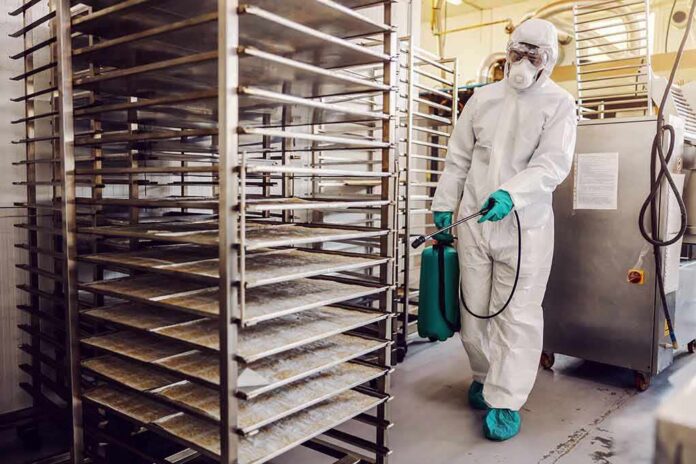
Studies of hygiene attributes reinforce the same point. Clean dishes, equipment, infrastructure, and cutlery are linked to fear of infection, while employee cleanliness strongly shapes perceptions of food safety. The University of Missouri research went further, noting that restaurants were underperforming on fingernail cleanliness, clean uniforms, and glove use while handling food, all of which are cues customers notice even when they cannot see the full chain of contamination control. In practice, a restaurant’s safety reputation is built partly in the kitchen and partly in the customer’s line of sight.
Why a Single Outbreak Can Rattle an Entire Category
The clearest recent example is the Reuters-reported cyclosporiasis outbreak tied to iceberg lettuce served at Taco Bell and traced by the FDA to Taylor Farms operations in central Mexico. The significance of that episode is not limited to one chain. It shows how an upstream ingredient problem can spill downstream into consumer anxiety across restaurant brands, because diners rarely distinguish cleanly between a supplier failure, a restaurant’s food handling, and the final illness experience. Once the public hears that a menu item or ingredient is implicated, the reputational damage can spread faster than the pathogen itself.
This is why restaurant food-safety fear has a supply-chain dimension. Leafy greens, produce, and other high-volume ingredients can enter many kitchens at once, and when they are implicated in outbreak investigations, the concern reaches far beyond one dining room. The public often experiences that as a sudden widening of risk: one headline becomes a reason to avoid an entire cuisine, chain, or category of menu item. That reaction is rational from the consumer’s point of view, even if the actual hazard is confined to a narrower upstream problem.
What the Evidence Shows About the Size of the Risk—and What It Does Not
The strongest evidence in this subject is about outbreaks, perceptions, and behavior; it is weaker on absolute risk comparisons in everyday dining. CDC and FDA material clearly establish that restaurants are a common outbreak setting and that unsafe food handling is a recurring contributor. But consumer studies mostly measure fear, perceived vulnerability, and avoidance, not the precise incidence rate of illness per meal eaten in restaurants versus other venues. That distinction matters. Fear can be fully real even when the public’s picture of frequency is incomplete.
At the same time, the evidence does not support dismissing restaurant food-safety anxiety as mere hysteria. The recurring hazard profile is well documented: unsafe sources, inadequate cooking, improper holding temperatures, contaminated equipment, and poor hygiene are not abstract risks, but the standard failure modes FDA has identified in restaurant outbreaks. In other words, the public is reacting to a real pattern of preventable error. The hard part is that the pattern is broad enough to be legitimate, yet uneven enough that a given restaurant may be perfectly safe while the category still carries a durable stigma.
🥪 3 bites with lunch, August 9:
1. Food Safety Fears Rattle Restaurants and Diners — per Bloomberg Markets.
2. How THC tests have landed new mothers onto child abuse registries — per CBS Health.
3. Cyberattacks on US water systems in 7+ states reported to FBI — per Business… pic.twitter.com/hCMH7xvZLv
— Signal Pop News (@SignalPopNews) August 9, 2026
Why the Fear Outlives the Incident
Food-safety fear is sticky because it combines two things that humans remember well: contamination and betrayal. When diners get sick, or even believe they might have been exposed, they do not experience it as a statistical event; they experience it as a breach of trust. That is why prior illness experience has such a strong relationship to restaurant-going behavior, and why visible cleanliness cues matter so much in a sector where the decisive hazards are usually hidden from view.
The broader lesson is straightforward. Restaurant food-safety fears persist not because the public misunderstands the issue, but because the issue is structurally suited to anxiety: the risks are real, the warning signs are often indirect, and the consequences can be immediate. Outbreaks may be episodic, but the conditions that produce them are routine, which is why every high-salience incident refreshes an old public memory rather than creating a new one.
Sources:
youtube.com, tandfonline.com, dr.lib.iastate.edu, reuters.com, nsf.org, academia.edu, sciencedirect.com, indianretailer.com, munewsarchives.missouri.edu, pmc.ncbi.nlm.nih.gov, cambridge.org, foodprotection.org, cdc.gov