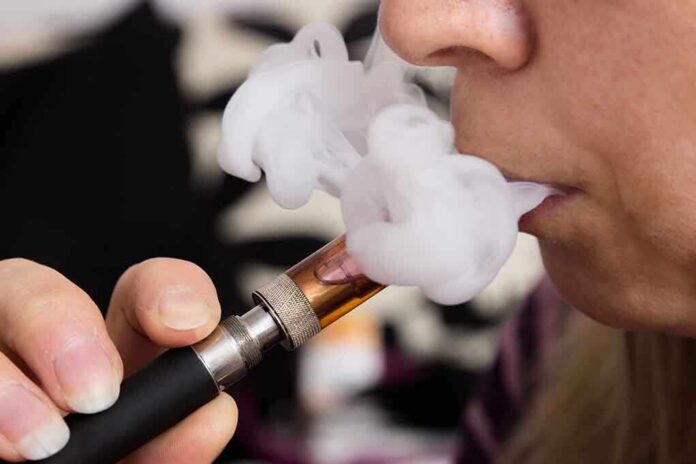
The clearest thing we know about vaping today is not a headline about immediate disease, but a mechanistic signal: regular use measurably rewires gene activity and epigenetic marks in oral and airway–adjacent tissues, and those shifts vary with device power and—crucially—the flavors people choose.
At a Glance
- Human studies report thousands of gene-expression changes in regular vapers, with the mix of device generation and flavor explaining most of the variance in those shifts.
- Independent lines of evidence point to DNA damage and epigenetic dysregulation in vapers; several endpoints look similar to smokers on broad methylation markers.
- Flavor categories are not interchangeable: “sweet,” “fruit,” and “mint/menthol” differ across biomarkers, and rankings can invert across endpoints.
- These molecular signals are not the same thing as proven disease causation—yet they map onto plausible pathways of harm and justify caution while outcome data mature.
What the molecular signal actually shows
When scientists say vaping changes “gene expression,” they mean the transcriptional output of genes—how much RNA a gene produces—shifts relative to nonusers. In a 2026 human study of oral cells, regular vapers differed on 3,124 genes versus non-smokers/non-vapers. The study’s most consequential finding is not just the count, but the structure: two-thirds of the observed differences tracked with device generation and flavor choice rather than vaping frequency or duration; exposure intensity explained a smaller fraction. That pattern argues the aerosol’s composition—and the way a device heats it—matters as much as, or more than, “how much” a person vapes.
Gene-expression snapshots are only part of the picture. Human biomarker studies also show increased DNA damage in oral epithelial cells of vapers compared with nonusers, with device class and flavor category associated with the magnitude of damage. In a study using established genotoxicity assays, sweet-flavored products sat at the high end, followed by multiple-flavor users, then mint/menthol, tobacco, and fruit—an ordering that underscores a key point: flavor categories are chemical buckets, not single molecules, and different endpoints will reorder them. Reviews of e-cigarette biology converge on the mechanisms behind these signals: heating propylene glycol/vegetable glycerin with flavor aldehydes and acids yields reactive carbonyls and other species capable of producing oxidative stress, DNA adducts, and repair-pathway activation.
Epigenetics, defined—and why it matters here
Epigenetics refers to chemical modifications to DNA and chromatin—such as methylation—that regulate gene activity without changing the underlying sequence. Several human studies and reviews report that exclusive vapers exhibit reductions in global methylation markers (for example, hypomethylation of LINE-1 elements) similar to smokers when compared with nonusers, alongside changes in epigenetic “aging” clocks and site-specific marks tied to inflammation and cardiopulmonary pathways. Animal inhalation models buttress the plausibility: controlled e-cig aerosol exposure drives methylation changes that enrich for cancer-related pathways, showing that, at least in mammals, sub-chronic exposure can reprogram regulatory marks along disease-relevant axes. None of this proves that an individual vaper will develop a specific disease, but it removes the comfort of assuming neutral biology.
Crucially, these epigenetic findings coexist with the transcriptomic results; both are readouts of cellular regulation perturbed by exposure. Where gene expression is the near-term output, methylation is a slower-moving layer that shapes the expression landscape over time. In practice, observed hypomethylation and altered expression of DNA-repair and cell-cycle genes form a coherent mechanistic throughline with the DNA damage assays: more damage, altered repair signaling, and re-tuned transcriptional programs.
Flavor and device are determinants—not footnotes
Public debate often collapses vaping into “nicotine plus solvent,” but the empirical signal points to two amplifiers: flavoring chemistry and device power profile. Pod systems that deliver high-nicotine formulations at specific coil temperatures produce different aerosol chemistry than open-tank mods; those differences, in turn, track with DNA damage levels among vapers in human oral-cell studies. On the chemistry side, flavor aldehydes (such as vanillin and cinnamaldehyde analogs), fruity esters, and cooling agents can form or catalyze reactive species under heat, altering oxidative burden and barrier integrity in epithelial cells—mechanisms observed across in vitro and organotypic models and summarized in recent comprehensive reviews.
The transcriptomics paper’s partitioning of variance assigns roughly two-thirds of the expression shift burden to flavor/device categories, with the remainder to dosage/exposure metrics. A separate synthesis reports that the direction of gene changes overlaps with cumulative e-liquid and nicotine exposure as well—reassuring in methodological terms, because it means the signal is exposure-responsive—but it is the categorical design (what and how you vape) that explains more of the spread between users. For consumers, that means choices marketed as mere matters of taste or convenience are measurable determinants of biological response.
What this does—and does not—establish about harm
Two things can be simultaneously true: biomarker shifts are not clinical endpoints, and they are the first credible warning signs along the causal pathway to disease. The strongest evidence today is molecular and cellular. It demonstrates association and mechanism—DNA damage, altered repair signaling, epigenetic dysregulation, and broad transcriptional reprogramming in tissues first-contacted by aerosol—not prospective incidence of cancer, COPD, or cardiovascular events. The gene-expression reports and the methylation literature themselves caution against over-reading causation; they stop short of claiming disease, and so should we.
Nevertheless, the weight of converging lines matters. When human oral cells in regular vapers show higher DNA damage than nonusers and, on some endpoints, approach smokers; when broad methylation marks shift in vapers similarly to smokers; when animal inhalation experiments push methylation programs toward cancer pathways; and when these changes vary predictably with flavor classes and device types—the prudent inference is not that flavored vaping is harmless pending perfect trials, but that it carries measurable, exposure-pattern–dependent biological risk that could translate to disease with time and dose.
Why flavor rankings disagree—and why that nuance matters
Readers will notice apparent contradictions: fruit flavors are linked to a large fraction of differentially expressed genes in one dataset, yet sweet flavors top DNA-damage rankings elsewhere. This is not a statistical parlor trick; it reflects the reality that “fruit” and “sweet” aggregate different mixes of esters, aldehydes, and sweeteners, and that transcriptomic breadth and genotoxicity magnitude are distinct biological endpoints. A flavor category might move many genes modestly (breadth) while another drives fewer but stronger DNA lesions (magnitude). Device heat flux, puff topography, and nicotine salt formulations further modulate aerosol composition. Treating flavor labels as interchangeable safety tiers misses the chemistry that actually governs harm.
How to read the evidence as a consumer—or policymaker
If you currently smoke, the comparative-safety frame remains relevant: for many toxicants, vaping appears to expose users to fewer combustion products than cigarettes. But “safer than smoking” is not the same as “biologically inert,” and none of the cited work exonerates flavors at the genomic or epigenomic level. On core regulatory endpoints—DNA damage, methylation shifts, transcriptome reprogramming—vapers differ from nonusers, and flavor/device choices push those differences around. For non-smokers, particularly youth, the signal argues against experimenting with flavored products under the assumption of negligible risk. For regulators, the most defensible near-term moves target ingredient transparency, limits on high-reactivity flavor chemicals, and performance standards for coil temperature control to reduce thermal decomposition products, while funding longitudinal cohorts that track flavor/device histories alongside repeated omics panels and clinical outcomes.
Sources:
youtube.com, wrdnews.org, nypost.com, news-medical.net, academic.oup.com, pmc.ncbi.nlm.nih.gov, pubmed.ncbi.nlm.nih.gov, tandfonline.com, facebook.com