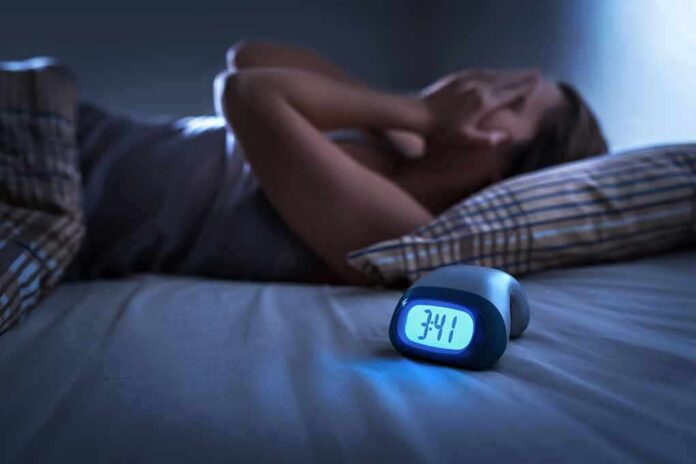
A gadget built to help you sleep better can end up keeping you awake instead. Sleep doctors have a name for it: orthosomnia, an unhealthy obsession with hitting a perfect sleep score that backfires and causes the very insomnia it was meant to fix.
Story Snapshot
- Doctors coined the term “orthosomnia” in 2017 after treating patients whose sleep trackers made their insomnia worse, not better.
- Studies estimate somewhere between 3 percent and 30 percent of tracker users show signs of this data-driven anxiety, depending on how strict the definition is.
- About one in three American adults now use some kind of digital sleep tracker, and roughly a third of them show risk signs for the condition.
- Major medical groups, including the American Academy of Sleep Medicine, still do not recognize orthosomnia as an official diagnosis.
How A Wellness Tool Turned Into A Source Of Stress
Doctors at Rush University Medical Center and Northwestern University’s Feinberg School of Medicine first described this problem in 2017. They studied three patients who came in for insomnia treatment armed with mountains of sleep tracker data. Instead of helping, the numbers made things worse. The doctors wrote that trackers “may pose unique challenges” in standard insomnia therapy and can feed “sleep-related anxiety or perfectionism”.
The name itself borrows from an eating disorder term. “Ortho” means straight or correct. The doctors picked it on purpose, because patients were chasing a perfect number the same way some people chase perfect food choices. The goal of sleep had quietly turned into a nightly test, complete with a grade, a red mark for failure, and the pressure that comes with any homework assignment.
Why So Many People Now Fit The Pattern
This is not a niche worry anymore. Roughly one in three American adults uses a wearable or app to track sleep, and researchers found nearly a third of those users scored positive for orthosomnia risk on standard screening questions. A separate population study built a four-part test using anxiety and insomnia scores and still found the condition showing up across a wide range of otherwise healthy adults.
The prevalence numbers bounce around a lot, and that itself tells a story. One study pegs the general population rate as low as 3 percent. Another, using looser criteria, found closer to 30 percent among tracker owners. Researchers themselves admit the definitions and measurement tools are still evolving, which is exactly why the range is so wide.
The Guardian And Harvard Both Flag The Same Trap
This is not just an American medical curiosity. The Guardian described a growing group of “sleep perfectionists” whose obsession with wearable scores was making bedtime exhausting rather than restful. Harvard Health put it plainly: the quest for better sleep can backfire, creating the anxiety and stress that thwart the very rest people are chasing.
Doctors Say The Fix Is Simpler Than The Problem
Sleep specialists at Northwestern, including one of the researchers who helped coin the term, say the real damage comes from checking the app the moment you wake up and treating every low score like a personal failure. A 2023 survey from the American Academy of Sleep Medicine found 35 percent of Americans check their tracker data before doing anything else in the morning. That habit turns a night’s rest into a report card before your feet even hit the floor.
Orthosomnia is real. Your fitness tracker obsessing over sleep scores can actually make sleep worse. The anxiety about optimizing every metric becomes the problem. Your body doesn't need perfect data. It needs consistent rest, real darkness, and your phone across the room.
— Health Declassified (Formerly The Yakking Show) (@HealthDeclass) September 21, 2026
The condition is not officially recognized by the American Academy of Sleep Medicine, and no formal diagnostic code exists for it yet. That does not make the pattern less real for the people living it. It simply means treatment right now relies on common sense: use the device as a rough guide, not a scoreboard, and stop letting a wristband decide whether last night counts as a win or a loss.
Sources:
time.com, publications.ergonomics.org.uk, pmc.ncbi.nlm.nih.gov, sleepfoundation.org, sleepreviewmag.com