Hormone therapy won’t make the number on your bathroom scale drop fast, but six years of clinical research show it can quietly change where fat sits on a woman’s body after menopause.
Quick Take
- Studies show hormone replacement therapy rarely causes major total weight loss on its own
- It does appear to reduce belly fat and visceral fat around organs in many women
- Those fat-distribution benefits tend to fade once therapy stops
- How estrogen is taken, pill versus patch, changes the outcome for fat and muscle
- No major medical group approves hormone therapy as an official weight-loss treatment
What The Research Actually Shows About The Scale
A widely cited study on postmenopausal women found something surprising. Body weight barely moved between the hormone therapy group and the placebo group. But relative fat mass dropped significantly in the treatment group, while it rose in the group taking a placebo. The takeaway is not “HRT burns fat.” It is that HRT seems to change the type of weight women carry, even when the scale stays put.
Medical reporters covering a separate cross-sectional study of about 1,500 postmenopausal women found a similar pattern. Women currently using hormone therapy had lower total body fat and lower visceral fat, the dangerous kind that wraps around internal organs. But researchers noted the effect disappeared once women stopped taking hormones, meaning this is not a permanent fix but an ongoing effect tied to active treatment.
Why Belly Fat Responds Differently Than The Scale Does
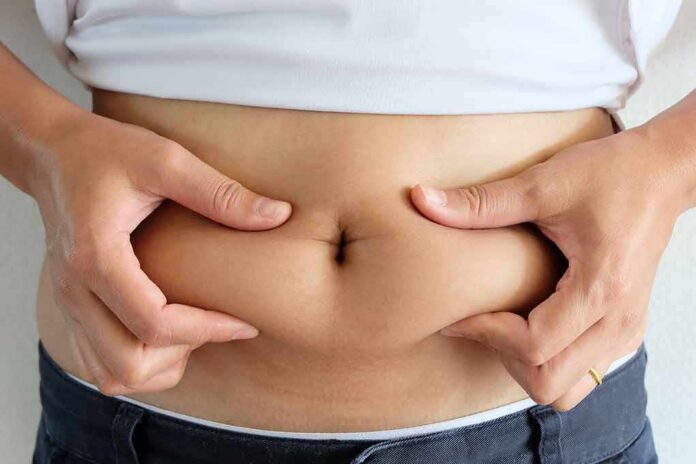
Menopause itself drives fat toward the belly. Falling estrogen speeds up fat gain, shrinks muscle mass, and pushes fat storage from hips and thighs toward the stomach and internal organs. That is why many studies measure waist size or visceral fat instead of only body weight. A clinical review found hormone therapy can slow this central fat buildup and help preserve muscle, even though it is not built or approved as a weight-loss drug.
This distinction matters for anyone reading headlines about hormone therapy and weight. A study can honestly report “no change in total body weight” and “meaningful reduction in belly fat” at the same time. Both statements can be true. The confusion comes from readers expecting one single number, the scale, to capture a much more complicated shift happening inside the body during and after menopause.
The Pill Versus The Patch Debate That Changes The Outcome
Not all hormone therapy works the same way. Research from Australia’s Garvan Institute found that oral estrogen, taken as a pill, actually reduced fat burning, increased total fat mass, and lowered lean muscle. Transdermal estrogen, delivered through a patch on the skin, avoided those downsides and instead helped prevent abdominal fat gain. The delivery method appears to matter as much as the hormone itself.
Other reviews back this up. One analysis of women using hormone therapy found significantly lower visceral fat, body mass index, and android fat, the pattern of fat storage common in men and linked to higher health risk, compared with women not on therapy. That is a meaningful health benefit even without a lower number on the scale, since visceral fat carries stronger ties to heart disease and diabetes than total body weight does.
What This Means For Women Weighing Their Options Today
Not every study agrees. One long-running analysis found weight and body fat percentage rose in both hormone therapy users and non-users during the menopausal transition, with no meaningful difference between groups, suggesting some midlife weight gain is simply tied to aging rather than hormones alone. That result is a useful reminder that hormone therapy is not magic, and results vary by woman, dose, and delivery method.
Postmenopausal women on tirzepatide lost more weight if they were also on menopause hormone therapy. Most people do not expect that.
A Mayo Clinic retrospective cohort in The Lancet Obstetrics, Gynaecology, & Women’s Health looked at 120 postmenopausal women with overweight or…
— Dr. K, M.D. (@DrKERMD) September 22, 2026
Medical guidance reflects this mixed but consistent picture. Professional societies state plainly that hormone therapy is not approved by federal regulators for weight loss or weight-gain prevention, even while acknowledging that estrogen-based therapy may reduce central fat buildup tied to menopause. For women considering treatment, the honest answer is that hormone therapy can support a healthier body shape over time, but it works best alongside diet and strength training, not as a replacement for either.
Sources:
health.usnews.com, healnourishgrow.com, mavenclinic.com, weightwatchers.com, tandfonline.com, journals.sagepub.com