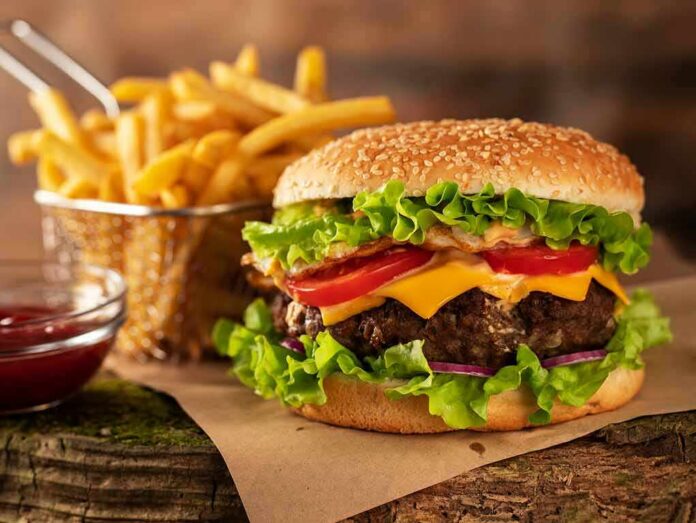
A single burger might cost you about 30 minutes of life, according to a nutrition website’s calculation that has food lovers doing math before they order lunch.
Quick Take
- NutritionFacts.org says a burger equals one “microlife,” a unit defined as 30 minutes of life expectancy lost.
- A separate University of Michigan analysis puts a cheeseburger’s cost closer to 9 minutes, and a hot dog at 36 minutes.
- Fact-checkers note these numbers come from population health models, not a stopwatch measuring one person’s actual lifespan.
- The debate reflects a bigger trend of turning complex diet research into bite-sized, viral numbers.
What The Microlife Claim Actually Says
NutritionFacts.org built its case around a simple idea. Scientists created the “microlife” to compare chronic health risks using one shared measuring stick. The site defines it plainly: a microlife equals 30 minutes of life expectancy. Under that math, eating one burger supposedly costs a person the same 30 minutes, as if a countdown clock ticks down the moment the last bite gets swallowed.
The site pushes the comparison further, suggesting a burger’s risk profile resembles smoking two cigarettes back to back. That is a striking image for anyone who would never light up before a meal but thinks nothing of ordering a double patty with cheese. The goal is not to shame burger eaters. It is to make an abstract statistic about heart disease and cancer risk feel real and immediate, the way a price tag feels real at a checkout counter.
A Rival Number Puts The Cost Much Lower
Not every calculation lands on 30 minutes. A widely cited University of Michigan analysis, built into a tool nicknamed the Health Nutritional Index, scored thousands of foods by weighing nutrition against disease risk. That study pegs a single cheeseburger at roughly 9 minutes of lost life, while a hot dog costs about 36 minutes and a soft drink costs 12 minutes. The gap between 9 minutes and 30 minutes shows how much these estimates depend on the model behind them.
Both figures point the same direction. Processed meat and salt-heavy fast food carry a measurable health cost across large populations. But the size of that cost swings depending on which researchers built the formula, what data they used, and how they defined “burger” in the first place. A fast-food double cheeseburger is not the same food as a lean, homemade beef patty on a whole wheat bun.
Why Health Experts Urge Caution With The Math
Fact-checkers have pushed back on treating these minute counts as literal countdown clocks. A widely shared claim about hot dogs cutting exactly 36 minutes off a person’s life got flagged because the underlying study measured healthy life expectancy, a population statistic, not an individual’s guaranteed lifespan hit. New York University nutrition professor Marion Nestle told CNN the numbers “may not be entirely reliable” for predicting what happens to any one eater.
A doctor questioned online about the hot dog claim gave an even blunter answer. He called the translation from population studies into simple per-item minute counts an oversimplification of real epidemiological research. That does not mean the underlying science is wrong. Red and processed meat consistently link to higher rates of heart disease and early death across large studies published in respected medical journals. It means the “30 minutes” or “9 minutes” figure works better as a memorable warning than as a literal prediction for any single burger you eat today.
The Real Lesson Behind The Numbers
Common sense still applies here. Nobody’s life ends 30 minutes earlier because of one burger on one Tuesday. These figures average out risk across millions of people and decades of eating habits, then compress that average into a punchy soundbite. Readers who want a genuinely useful takeaway should focus on pattern, not panic: an occasional burger fits fine into most diets, while a steady diet built on processed meat and fried food carries real, well-documented health costs over a lifetime.
The “minutes of life” framing succeeds because it turns dry statistics into something a person can picture at the drive-through window. That is smart communication, not dishonest science. But readers over 40, who have likely outlived a few fad diets already, should treat these numbers as a nudge toward moderation rather than a medical verdict on last night’s dinner.
Sources:
nutritionfacts.org, brobible.com, zoe.com, pubmed.ncbi.nlm.nih.gov, cnn.com