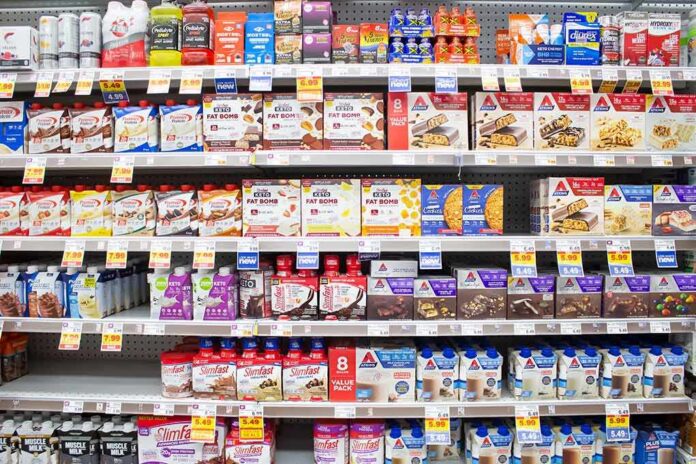
Grocery shelves are now packed with protein bars, protein chips, protein popcorn, and even protein water, but the actual number your body needs fits on one simple scale most shoppers never check.
Quick Take
- CBS Mornings tackled the protein snack boom with allergist and immunologist Dr. Tania Elliott, who explained how much protein people actually need and shared favorite snack picks.
- The standard protein target is 0.8 grams per kilogram of body weight daily, a baseline set by the Institute of Medicine decades ago.
- Federal data shows many American adults already eat about 20 percent more protein than recommended.
- A practical snack goal is roughly 7 to 10 grams of protein paired with fiber to curb hunger between meals.
A Grocery Aisle Trend Built on a Real Nutrition Question
Snacks with added protein have taken over store shelves, and CBS Mornings put a name and a number behind the trend. Dr. Tania Elliott walked viewers through how to balance protein intake and picked her favorite high-protein snack options for the segment titled “Protein snacks are everywhere. How much is enough?”. The question lands at a moment when protein marketing shows up on everything from yogurt to bottled water.
The protein snack category is not a passing fad. Industry researchers project the global market will nearly double in value by 2032, driven by shoppers who snack often and want something that feels healthier than a candy bar. Nearly half of Americans now snack three or more times a day, which gives food companies strong incentive to slap a protein claim on the label.
What the Science Actually Recommends
The real baseline is less exciting than the marketing. The Recommended Dietary Allowance for protein is 0.8 grams per kilogram of body weight, or about 0.36 grams per pound, a figure the Institute of Medicine set in the early 2000s for all adults regardless of age or sex. For a 150-pound man, that works out to roughly 55 grams of protein a day, with women needing a bit less.
That RDA is a floor meant to prevent deficiency, not a target for peak performance, and some nutrition experts argue active adults may benefit from more. One registered dietitian quoted in separate CBS coverage put the average woman’s daily need at about 61 grams and suggested that figure might be too low for people trying to build muscle or manage weight. The gap between the bare minimum and an ideal amount is exactly where protein snack marketing thrives.
Americans Are Already Hitting the Mark, Data Shows
Here is the twist most protein-snack ads skip. Centers for Disease Control and Prevention data cited in recent CBS reporting shows United States adults are already eating about 20 percent more protein than recommended, not less. That undercuts the implied urgency behind rows of protein-boosted cookies and shakes marketed as a fix for a shortage that, for most people, does not exist.
The federal Dietary Guidelines, built around the government’s protein-equivalent recommendations, call for roughly 5 to 7 ounces of protein foods daily depending on age and sex, covering meat, dairy, beans, and nuts together, not snacks alone. Treating a protein bar as a bonus on top of three normal meals is how many people end up well past what their body uses.
Picking a Snack That Actually Helps
For anyone still reaching for a protein snack between meals, portion size matters more than the marketing claim on the wrapper. Nutrition writers point to roughly 7 to 10 grams of protein, combined with fiber, as a sweet spot that curbs hunger without piling on unnecessary calories or added sugar. Pairing that snack with vegetables, fruit, or whole grains rounds out the nutritional value far better than relying on protein content alone.
Diet researchers have also found that shifting even a small share of daily calories toward protein, from about 18 percent to 20 percent, can nudge people toward better overall food choices, including less added sugar and more vegetables. That suggests the protein snack trend is not harmful for most healthy adults, so long as shoppers treat the label as one data point, not a nutritional free pass.
Common sense still applies here. A snack wrapper boasting “20 grams of protein” does not override the simple math of body weight, activity level, and what the rest of the day’s meals already provide. Readers are better served checking their own numbers against the long-standing RDA than trusting shelf marketing built to sell a trend.
Sources:
youtube.com, cbsnews.com, health.harvard.edu, healthcentral.com, scielo.isciii.es, pmc.ncbi.nlm.nih.gov