A routine brain operation in 1987 turned into a moment where a man’s hand stopped shaking—and brain surgery changed forever.
Story Snapshot
- A “wrong” dial turn in the operating room led to high‑frequency deep brain stimulation (DBS)
- DBS now helps more than 100,000 people with severe Parkinson’s disease regain control of their bodies
- Prof. Alim-Louis Benabid, trained in both physics and medicine, turned a fluke into a repeatable therapy
- Doctors still do not fully know why DBS works so well, even as it wins top medical prizes
How a single twist of a dial rewired the future of brain surgery
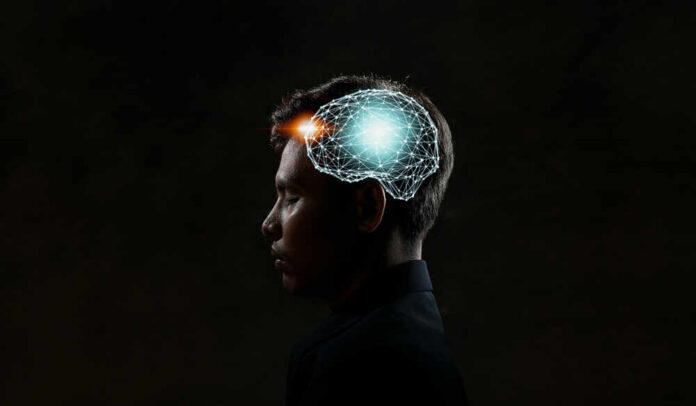
French neurosurgeon Alim-Louis Benabid was in the operating room in 1987, doing what should have been a routine procedure to destroy a tiny brain area causing tremor. He was using an electrode to test the region in the thalamus before making an irreversible lesion. At normal test frequencies, about 30 to 50 cycles per second, the tremor stayed. Then he raised the frequency above 100 cycles per second. The patient’s tremor stopped, suddenly and completely, while the person stayed awake and alert.
That single moment broke the old rule book. Until then, surgeons relied on burning or cutting brain tissue to reduce tremor, which meant permanent damage and no way to adjust if things went wrong. Benabid realized he could mimic the benefits of a lesion with high-frequency stimulation without destroying anything. He then asked a simple but radical question: instead of burning this spot, what if we leave an electrode in and keep stimulating it long term?
The physicist–surgeon who saw a pattern others missed
Benabid was not a typical brain surgeon. He earned a medical degree and became a neurosurgeon, but he also completed a doctorate in physics. That mix gave him a habit of thinking in terms of signals, circuits, and feedback loops, not just scalpels and scars. When he saw high-frequency current shut down tremor without a lesion, he did not dismiss it as a fluke. He treated it like a reproducible effect in a physical system and built an entire therapy around it.
Over the next few years, he and his team tested the approach in more patients with essential tremor and Parkinson’s disease. They confirmed that high-frequency deep brain stimulation, delivered through implanted electrodes, could quiet tremor, muscle stiffness, and slow movement while leaving brain tissue intact. The key insight was not “electricity helps,” which was known, but that very high-frequency stimulation could act like a reversible brake, not a jolt.
From experimental trick to lifeline for thousands of patients
Turning this idea into a practical therapy required hardware, not just theory. Benabid worked with engineers and industry partners to create thin, four-contact electrodes designed for precise placement deep in the brain and connected to a battery-powered stimulator under the skin. The result looked like a pacemaker for the brain. Surgeons could aim the stimulation at tiny targets such as the subthalamic nucleus, and doctors could later adjust settings in the clinic instead of sending patients back to the operating room.
By the mid‑1990s, his group showed that deep brain stimulation of the subthalamic nucleus could ease tremor, rigidity, and slowness, and also reduce the wild, drug-induced movements that often plague advanced Parkinson’s patients. Outcomes were not perfect, but many people who could barely feed or dress themselves regained key daily abilities. Over time, deep brain stimulation moved from daring experiment to standard of care for severe movement complications that drugs could not control.
Recognition, reach, and the unanswered questions
The impact did not stay local. By the 2010s, the Lasker Foundation credited Benabid’s approach with providing an effective treatment for more than 100,000 people worldwide with severe Parkinson’s complications. He shared the 2014 Lasker–DeBakey Clinical Medical Research Award and later received the Breakthrough Prize in Life Sciences for this work, honors usually seen as just one step below a Nobel. Those awards reflected a broad medical consensus: this was not a fringe idea but a major advance.
Deep brain stimulation now reaches beyond Parkinson’s. Clinicians use it for dystonia, epilepsy, and in some cases depression, always with careful selection and follow-up. Patients often ask the question any skeptic should: if we do not know exactly how it works, should we trust it? That concern is fair. Even top papers and prize committees admit the exact mechanism of deep brain stimulation remains unknown. Yet the clinical results, from controlled trials and long-term follow-up, keep lining up on one side: it helps many people when other options fail.
Why this story fits a larger pattern in medical breakthroughs
Benabid’s path follows a familiar pattern in medical history. A doctor notices something unexpected during routine care, treats it as a clue instead of noise, and then spends years turning it into a safe, repeatable tool. That arc echoes the adoption of anesthesia and penicillin. Skeptics sometimes point to industry partnerships and prize committees as proof of hype. But the more serious question is simpler and more grounded in common sense: does the treatment, under strict testing, give real, meaningful benefit?
On that standard, deep brain stimulation clears the bar. Regulators in Europe and the United States demanded evidence before approval, not press releases. Patients still deserve straight talk: this is brain surgery, not magic, and it does not cure Parkinson’s disease. Yet when a man who could not hold a spoon can once again drink coffee without spilling it, based on a discovery that began with a twist of a dial, it is hard to deny that something remarkable happened in that 1987 operating room—and that it is still echoing through thousands of lives today.
Sources:
youtube.com, jamanetwork.com, laskerfoundation.org, linkedin.com