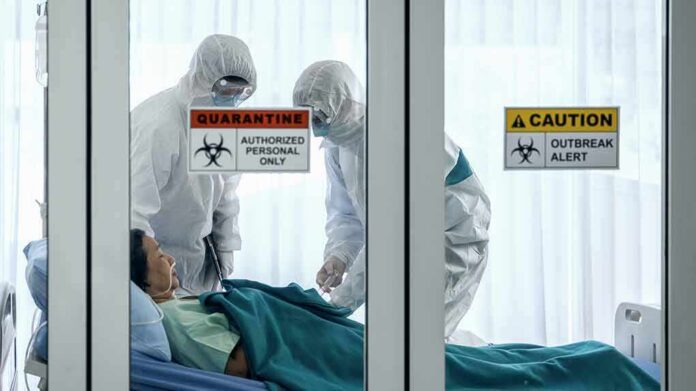
Measles is spreading inside the United States again, and health officials say the country no longer counts as free of the disease.
Quick Take
- The Pan American Health Organization (PAHO) says the United States lost its measles elimination status on November 17, 2026, ending a 26-year streak.
- The decision came after the same strain of measles spread inside the country without stopping for over 12 months.
- The Centers for Disease Control and Prevention (CDC) counted 5,412 measles cases this year, with 96% tied to ongoing outbreaks.
- State health leaders blame falling vaccination rates, which have dropped below the level needed to stop the virus from spreading.
What PAHO Actually Decided
An independent panel of experts working with PAHO reviewed the evidence and concluded the United States no longer meets the standard for measles elimination. PAHO Director Jarbas Barbosa accepted that recommendation on November 17, 2026. Mexico and Bolivia lost their elimination status the same day. The United States first earned elimination in 2000, meaning no single chain of measles transmission had lasted a full year since then.
Elimination never meant measles was gone for good. It meant the virus could still arrive through travelers, but local health teams would stamp it out before it spread for 12 straight months. PAHO’s technical team traced the current outbreak back to January 20, 2025. By January 20, 2026, the same genotype had been circulating without a break for a full year, meeting the formal threshold for losing elimination status.
Why Vaccination Rates Are at the Center of This Story
The CDC reports that measles vaccine coverage among kindergartners fell from 95.2% in the 2019-2020 school year to 92.4% in 2025-2026. That drop leaves roughly 280,000 kindergartners without protection. Health officials say coverage needs to stay above 95% for communities to block sustained spread. Once coverage slips under that line, even a single imported case can ignite a chain of infections that doesn’t burn out.
Illinois Department of Public Health Director Sameer Vohra put the blame plainly. He said the loss of elimination status is the direct result of declining national vaccination rates. That statement reflects a view shared by several state health agencies watching coverage slide year after year. Falling vaccination isn’t the only factor in any outbreak, but it is the one public health leaders keep pointing to first, because it is the one most within reach of being fixed through local, voluntary action rather than federal mandates.
What This Status Loss Means Going Forward
Losing elimination status doesn’t trigger new federal rules or restrictions on its own. It is a scorecard entry, not a legal switch. But it does signal that measles has shifted from an occasional imported nuisance back into a disease capable of sustaining itself on American soil. Getting elimination status back will require another unbroken year without sustained local transmission, which depends heavily on rebuilding vaccination coverage community by community.
Measles is back in the United States, WHO authorities say. The Pan American Health Organization has determined that the U.S. has lost its measles elimination status, meaning domestic spread of the virus is now significant and sustained.https://t.co/X0pFvQ6AWC
— Tschooo Siffert (@tschooo) November 18, 2026
Parents choosing whether to vaccinate their kids are the real front line here, not Washington bureaucrats or international health panels. The measles vaccine has a decades-long safety record and stops a disease that can cause pneumonia, brain swelling, and death in children. Restoring high vaccination rates through trusted family doctors and local clinics, rather than top-down mandates, is the most durable path back to the elimination status the country held for over two decades.
Sources:
time.com, cnbc.com, tools.cdc.gov, sph.brown.edu