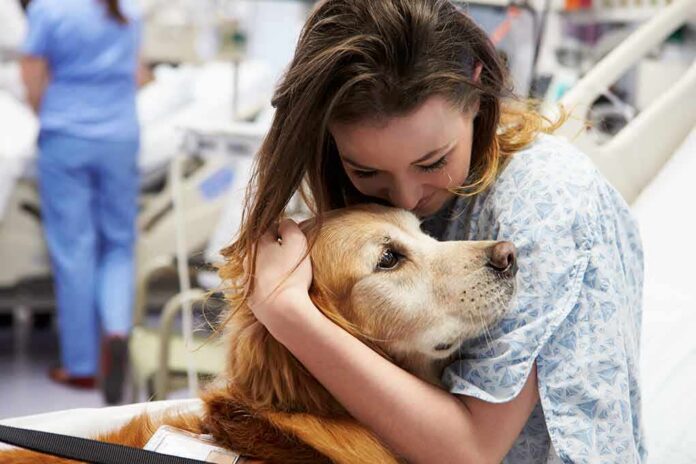
A family dog in England started acting strangely around a baby boy, and that behavior helped lead his mother to discover he had a serious heart condition.
Story Snapshot
- A mother in England says her family dog’s unusual behavior helped alert her to her baby’s congenital heart condition.
- ABC News and Good Morning America reported the story, describing the animal as a “family dog,” not a trained medical-alert dog.
- Research on medical-alert dogs shows owners often report high accuracy, but those ratings come from personal observation, not clinical testing.
- The case adds to a growing pile of stories about pets picking up on health changes before doctors do.
What Happened In England
Good Morning America reporter Danny New spoke with a mother in England whose family dog’s actions helped alert her that her baby boy had a congenital heart condition. The report does not name the mother, the baby, the dog, or the hospital involved. It also does not say exactly what the dog did or when the behavior started compared to the medical diagnosis.
The segment ran under the title “Dog sniffs out baby’s medical condition,” a catchy phrase that suggests the dog diagnosed the illness. The actual description is more careful. It says the dog’s actions “helped alert” the mother, not that the dog identified the specific heart problem on its own.
Family Dog, Not A Trained Service Animal
ABC News calls the animal a “family dog,” a detail that matters. Under the Americans with Disabilities Act, a service dog is a canine individually trained to do specific tasks for a person with a disability, including alerting to a medical crisis. Nothing in the report says this dog went through that kind of training. That does not make the story less real. It just means the dog likely reacted on instinct, not learned skill.
The family dog label changes how people should think about the story. A trained medical-alert dog would suggest a tested skill with some track record behind it. A family pet noticing something is different. It points to the idea that ordinary animals can sometimes pick up on changes in a person’s body, smell, breathing, or behavior, even without any formal training.
What Research Says About Alert Dogs
A survey of 61 medical-alert-dog owners found their dogs reportedly alerted to 33 different health conditions. Eighty-four percent said their dog alerted to more than one condition, and 54% said their dog alerted to more than one person. Most of those owners rated their dog’s accuracy between 75% and 100%, but those numbers came from personal impressions, not lab testing or blinded trials.
That gap between owner belief and scientific proof shows up across this entire field. Dogs may be responding to smell, body movement, or stress signals rather than directly sensing an illness itself. Researchers studying these claims say more controlled testing is needed to know exactly what cues dogs are picking up on and how reliable those reactions really are.
Why The Difference Matters For Families
None of this takes away from what the mother in England experienced. Her baby did have a congenital heart condition, and her dog’s behavior played a part in getting him checked out. That outcome stands on its own. The broader research simply helps explain why a pet’s odd behavior is worth paying attention to, even without formal medical training behind it.
Congenital heart conditions affect roughly one out of every hundred babies born, and many are not obvious at birth. Parents who notice a pet acting unusual around a child, especially repeated or persistent behavior, may want to mention it to a pediatrician. It costs nothing to ask, and in this case, it may have led a family to answers sooner than they otherwise would have gotten them.