Every two seconds someone in the world has a stroke, and the treatment that saves one person’s life could kill another — because not all strokes are the same.
At a Glance
- Strokes split into two fundamentally different types — ischemic (blockage) and hemorrhagic (bleeding) — and each demands the opposite treatment strategy.
- Giving a clot-busting drug to a bleeding stroke patient can be fatal, which is why emergency diagnosis before treatment is non-negotiable.
- Ischemic stroke patients have a narrow treatment window — clot-dissolving medication and mechanical clot removal must happen fast to prevent permanent brain damage.
- Recognizing stroke symptoms and calling 911 immediately remains the single most important action any bystander can take.
Two Strokes, Two Completely Different Emergencies
Most people think of a stroke as one thing. It is not. An ischemic stroke occurs when a blood clot blocks an artery supplying the brain, starving tissue of oxygen and nutrients. [8] A hemorrhagic stroke happens when a blood vessel ruptures and bleeds into or around the brain. [4] These two events look nearly identical from the outside — sudden numbness, confusion, slurred speech, vision loss — but inside the skull, one is a plumbing blockage and the other is a burst pipe. The treatments are not just different; they are mutually exclusive in dangerous ways.
Giving a clot-dissolving drug to someone whose brain is already bleeding would accelerate the hemorrhage and could kill them. That single fact explains why emergency responders and physicians race to image the brain before administering anything. The clock is running, but the diagnosis has to come first. This is not a situation where guessing is acceptable.
What Doctors Actually Do for an Ischemic Stroke
For an ischemic stroke, the clinical goal is simple to state and brutally hard to execute in time: restore blood flow to the brain as fast as possible. [5] Two primary tools exist. The first is an intravenous clot-busting medication — tissue plasminogen activator (TPA) — injected through an IV to chemically dissolve the clot. [3] The second is an emergency endovascular procedure where physicians thread a catheter into the blocked artery and mechanically remove the clot. [1] Both interventions are time-sensitive. Brain cells die by the millions with each passing minute during an ischemic event, which is where the clinical phrase “time is brain” earns its weight.
The time window for tissue plasminogen activator (TPA) is narrow — generally within a few hours of symptom onset — and not every patient qualifies. [9] Age, blood pressure, recent surgeries, and other medications all factor into eligibility. This is another reason why calling 911 immediately, rather than driving to an urgent care clinic or waiting to see if symptoms pass, changes outcomes. Emergency medical teams begin the diagnostic process en route. Every minute of delay narrows the treatment options available when the patient arrives.
What Doctors Actually Do for a Hemorrhagic Stroke
Hemorrhagic stroke treatment moves in the opposite direction entirely. The goal shifts from restoring blood flow to stopping bleeding and reducing dangerous pressure building inside the skull. [4] Depending on the source and severity of the bleed, physicians may use emergency medications to lower blood pressure and prevent the hemorrhage from expanding. For certain types of hemorrhagic stroke — particularly those caused by a ruptured aneurysm — surgical options come into play, including clipping the aneurysm directly or using a minimally invasive coiling procedure to seal it off from inside the blood vessel. [6] Neither approach involves clot-busting drugs.
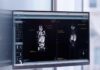
Artificial intelligence is beginning to reshape how quickly physicians can distinguish between stroke types and identify the best intervention. Mayo Clinic researchers are actively developing AI tools that analyze brain imaging faster than traditional review, potentially compressing the critical minutes between arrival and treatment decision. [2] The underlying biology of stroke has not changed, but the speed at which medicine can respond to it is accelerating. For patients, that gap between symptom onset and treatment remains the most consequential variable in whether they walk out of the hospital or do not walk at all.
The One Thing Every Bystander Must Know
No bystander can diagnose a stroke type. No family member standing in a kitchen watching someone’s face droop and arm go weak can know whether that brain is flooding or starving. What every bystander can do — and what the evidence consistently supports — is call 911 immediately. [3] The FAST acronym covers the basics: Face drooping, Arm weakness, Speech difficulty, Time to call 911. Recognizing those signs and acting without hesitation is the only intervention available outside a hospital. The rest belongs to emergency medicine. But none of it happens without that call.
Sources:
[1] YouTube – Mayo Clinic Minute – Lifesaving treatments for stroke
[2] Web – Mayo Clinic Minute: Stroke treatment
[3] Web – Transforming Stroke Care and Outcomes Using AI
[4] Web – Seek Immediate Treatment at First Signs of Stroke
[5] Web – What is a stroke? A Mayo Clinic expert explains
[6] Web – Stroke – Diagnosis and treatment – Mayo Clinic
[8] YouTube – Mayo Clinic Minute: Stroke treatment
[9] Web – Stroke – Symptoms and causes – Mayo Clinic